
sidq

Sidq is truthfulness in speech, intention and action. These articles cover al-Ghazali’s levels of sidq and the story of Ka’b ibn Malik.

  • Prophet Idris in the Qur’an: Utterly Truthful, Patient and Lifted to a Lofty Place

    Prophet Idris in the Qur’an: Utterly Truthful, Patient and Lifted to a Lofty Place

    Some prophets fill whole surahs. Idris appears in just four verses. The Qur’an tells us no events from his life, no dialogue and no people he was sent to. What it gives instead is a short portrait of character: truthful, patient, righteous, and honoured by God.

    This is day four of our Qur’an Stories series. We read the verses in Arabic on Quran.com, give their meaning in plain English, and follow the explanation of Ibn Kathir. This is a reflection on meaning, not a ruling.

    Quick answer

    Short answer: The Qur’an says of Idris that “he was utterly truthful, a prophet. And We lifted him to a lofty place” (19:56-57). It also names him with Isma’il and Dhu’l-Kifl: “each of them was among those who endure with patience… they were truly among the righteous” (21:85-86). Scholars differ on what “a lofty place” means; Ibn Kathir reports views including the fourth heaven and Paradise.

    Where Idris appears in the Qur’an

    Key takeaways

    • Passages: 19:56-57 in Surah Maryam and 21:85-86 in Surah al-Anbiya.
    • Described as: “utterly truthful, a prophet.”
    • Listed among: “those who endure with patience” and “the righteous.”
    • Honour: “We lifted him to a lofty place.”

    The Qur’an does not tell us when he lived, where, or to whom he was sent. In keeping with this series, we do not fill those gaps.

    “Utterly truthful, a prophet”

    Surah Maryam brings a run of prophets before the reader, each with a command to remember. For Idris it says (19:56):

    وَٱذْكُرْ فِى ٱلْكِتَـٰبِ إِدْرِيسَ ۚ إِنَّهُۥ كَانَ صِدِّيقًا نَّبِيًّا

    Meaning: Recall in the Scripture Idris: he was utterly truthful, a prophet.

    The Arabic word is siddiq, from sidq, truthfulness. It describes someone whose truth runs through speech, intention and action. Ibn Kathir notes that Allah praised Idris as truthful and a prophet, and told of raising him to a high place (Tafsir Ibn Kathir, 19:56).

    “We lifted him to a lofty place”

    The next verse is just as short (19:57):

    وَرَفَعْنَـٰهُ مَكَانًا عَلِيًّا

    Meaning: And We lifted him to a lofty place.

    The verse itself does not explain what the lifting was.

    ViewReported fromNote
    The fourth heavenMujahid, via Ibn KathirLinked to the Night Journey hadith below
    ParadiseAl-Hasan and others, via Ibn KathirAlso reported in Ibn Kathir’s tafsir
    How the commentators read 19:57

    Both views are recorded by Ibn Kathir. We present them side by side, as he does, without choosing between them.

    The Night Journey hadith

    In the hadith of the Isra and Mi’raj, in the fourth heaven the Prophet ﷺ greeted Idris, who said: “Welcome, brother and prophet.” (Sahih al-Bukhari 3207, graded sahih). A narration in Sahih Muslim 162a, also sahih, mentions Idris in the fourth heaven and then quotes 19:57.

    “Among those who endure with patience”

    Surah al-Anbiya mentions Idris again, this time in a group (21:85-86):

    وَإِسْمَـٰعِيلَ وَإِدْرِيسَ وَذَا ٱلْكِفْلِ ۖ كُلٌّ مِّنَ ٱلصَّـٰبِرِينَ

    Meaning: And Isma’il, Idris and Dhu’l-Kifl: each of them was among those who endure with patience.

    وَأَدْخَلْنَـٰهُمْ فِى رَحْمَتِنَآ ۖ إِنَّهُم مِّنَ ٱلصَّـٰلِحِينَ

    Meaning: We brought them into Our mercy; they were truly among the righteous.

    The order is worth noticing. Enduring with patience comes first, then being brought into God’s mercy, then the description of righteousness. The verses do not say what each one was patient through.

    What we leave out

    Many older books add details about Idris: that he was the biblical Enoch, the first to write with a pen or sew clothes, or stories of how he was taken up. Some English translations even render his name in these verses as “Enoch”; the Arabic says Idris, and the link is not established. These details come largely from Isra’iliyyat (reports from earlier traditions) and cannot be confirmed from the Qur’an or sahih hadith. This series does not present them as fact.

    Truthfulness and patience together

    Read together, the two passages give us a small but complete picture. In Surah Maryam, Idris is utterly truthful. In Surah al-Anbiya, he is among those who endure with patience. Truth without patience can turn harsh, and patience without truth can become mere silence. Together they mark a servant God chose to raise.

    Lessons for the traveller of the heart

    Four reflections from Idris

    1

    Be known for truth: the first thing said of him is that he was siddiq, utterly truthful.

    2

    Hold steady: he is counted among “those who endure with patience.”

    3

    Seek mercy, not fame: “We brought them into Our mercy.”

    4

    Let God raise you: the verse says “We lifted him.” Rank is a gift, not a grab.

    Tip

    For a later, well-documented story of truthfulness, read our post on Ka’b ibn Malik and how telling the truth saved him. A short evening muhasaba is a gentle way to check your own words each day.

    FAQ

    Where is Prophet Idris mentioned in the Qur’an?

    In Surah Maryam, 19:56-57, and Surah al-Anbiya, 21:85-86.

    What does “lifted to a lofty place” mean?

    The verse does not say. Ibn Kathir reports that Mujahid said it means the fourth heaven and that al-Hasan and others said it means Paradise.

    Is Idris the same as Enoch?

    The Qur’an does not say so. The link comes from later reports, and it is not confirmed by the Qur’an or sahih hadith.

    Last checked: 26 October 2026 (Asia/Riyadh) against Qur’an 19:56-57 and 21:85-86 (Arabic text verified against the Uthmani text on Quran.com; English meanings are our own plain rendering), Tafsir Ibn Kathir (Abridged) for 19:56, Sahih al-Bukhari 3207 and Sahih Muslim 162a. Educational reflection only, not a religious ruling.
  • The Story of Ka’b ibn Malik: How Telling the Truth Saved Him

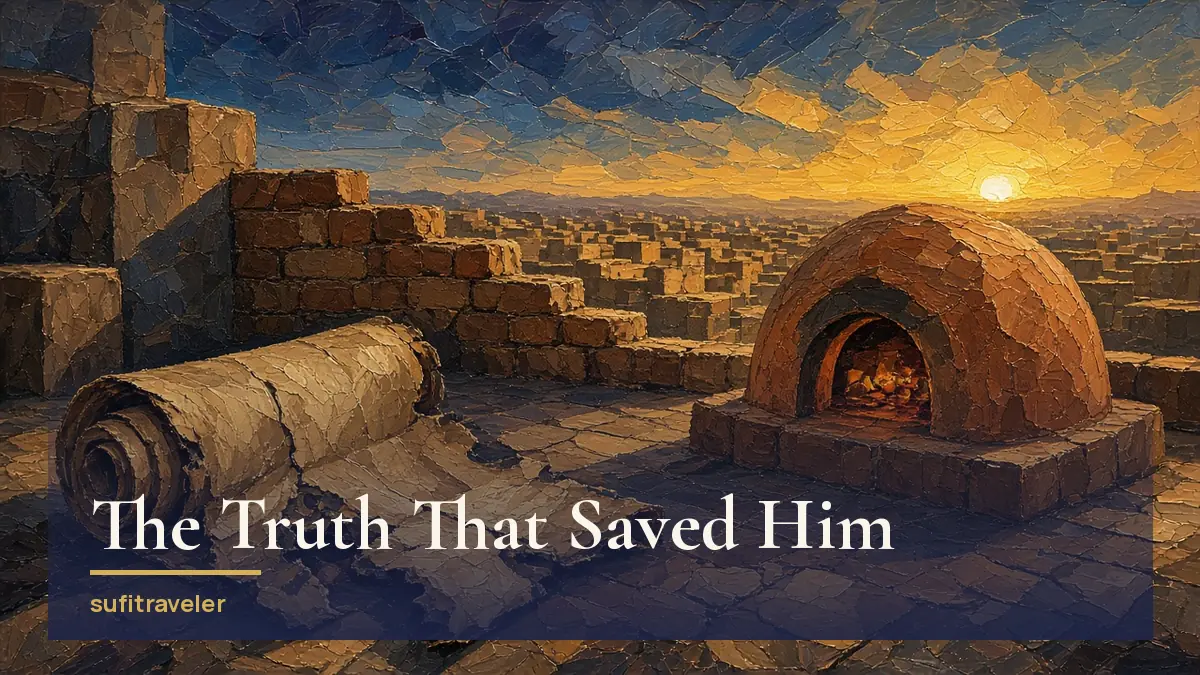
    The Story of Ka’b ibn Malik: How Telling the Truth Saved Him

    Some of the strongest teachings on truthfulness are told as stories. The story of Ka’b ibn Malik, a Companion of the Prophet (peace be upon him) from Madinah, is one of the longest first-person narrations in the hadith collections. He tells it himself: the worst failure of his life, and how one truthful answer turned it into his greatest blessing.

    It complements our introduction to sidq (truthfulness) in classical Sufi teaching, which explains the principle; here we see it lived.

    Quick answer

    Short answer: Ka’b ibn Malik stayed behind from the expedition of Tabuk without any excuse. When the Prophet (peace be upon him) returned, more than eighty men offered false excuses, but Ka’b told the plain truth. He and two others were left waiting for fifty nights, shunned by the community, until Allah revealed that their repentance was accepted (Qur’an 9:117-119). The narration is in Sahih al-Bukhari 4418 and Sahih Muslim 2769.

    The sources

    About this narration

    • Narrator: Ka’b ibn Malik, through his son ‘Abdullah.
    • Collections: Sahih al-Bukhari 4418 and Sahih Muslim 2769, both from the two most authoritative hadith collections.
    • Qur’an: the verses about the three who were left behind are in Surat al-Tawbah, 9:117-119.
    • Grading: sahih; both collections are accepted as authentic by Sunni scholars.

    The retelling below is in our own words; the few direct quotes are marked and attributed.

    Putting it off

    Ka’b opens by admitting that he had no excuse. At the time of Tabuk he was better off than ever, owning two riding camels. The journey ahead was long and the heat was fierce, so the Prophet (peace be upon him) told everyone plainly where they were going, so that they could get ready.

    Ka’b fully intended to go. Day after day he set out to prepare and came home with nothing done, reassuring himself: “I can do that” (Sahih al-Bukhari 4418, sunnah.com translation). The army marched out, he kept putting it off, and in the end the chance was gone.

    The moment of choice

    When he heard the Prophet (peace be upon him) was on his way back, Ka’b started rehearsing excuses. But as the Prophet came closer, the excuses fell away. He realised a lie would never get him out of this, and he made up his mind to tell the truth.

    Over eighty men came with excuses and oaths, which were accepted at face value.

    Then it was Ka’b’s turn. Asked why he had stayed behind, he admitted that he was skilled with words and could have talked his way out of trouble with anyone else. But a lie told now, he said, would be exposed by Allah before long, while the truth, however unwelcome today, left room to hope for forgiveness. Then he said simply: “Really, by Allah, there was no excuse for me” (Sahih al-Bukhari 4418, sunnah.com translation).

    The Prophet (peace be upon him) replied: “As regards this man, he has surely told the truth. So get up till Allah decides your case” (Sahih al-Bukhari 4418, sunnah.com translation).

    Pressure to take the easy way

    That was not the end of the test. Men from his own clan went after him and scolded him: why hadn’t he offered an excuse like everyone else and let the Prophet’s prayer for forgiveness cover him?

    What kept him firm was hearing that two others had answered the same way: Murara ibn al-Rabi’ and Hilal ibn Umayya, both veterans of Badr. Their example kept him from changing his answer.

    Fifty nights

    The community was told not to speak to the three men. Ka’b still went to the prayers and the market, though no one spoke to him.

    In the middle of this, a letter came from the king of Ghassan, offering him a warm welcome if he would come over. Ka’b’s reaction was: “This is also a sort of a test” (Sahih al-Bukhari 4418, sunnah.com translation). He put the letter into an oven and burned it.

    Relief at dawn

    On the fiftieth morning, Ka’b prayed Fajr on a rooftop, feeling that the whole world had closed in around him. Then a man shouted from the hill of Sala’, telling him to rejoice. Ka’b fell down in prostration.

    Allah had accepted their repentance. In our own paraphrase, Qur’an 9:118 speaks of the three who were left behind: the earth, wide as it is, felt tight to them and so did their own souls, until they understood that the only refuge from Allah is with Allah, and He turned to them in mercy. The next verse tells believers to be mindful of Allah and stay with the truthful (Qur’an 9:117-119).

    When Ka’b reached the Prophet (peace be upon him), he was told that this was the best day he had known since the day he was born.

    What Ka’b took from it

    Ka’b’s own conclusion is the heart of the story: “Allah has saved me for telling the truth; so it is a part of my repentance not to tell but the truth as long as I am alive” (Sahih al-Bukhari 4418, sunnah.com translation).

    He set his own case beside that of the men who had sworn false oaths, whom the Qur’an describes in 9:95-96. Other than being guided to Islam, he said, no blessing in his life was greater than not having lied that day.

    Lessons for everyday life

    Living the lesson

    1

    Watch the small delays. Ka’b’s failure began with putting things off until tomorrow. Notice where you are postponing what you know you should do.

    2

    Own it plainly. When you have fallen short, the first step is an honest account, without polishing.

    3

    Accept that truth may cost something now. Ka’b chose short-term difficulty over a lie that would have followed him.

    4

    Stay with good company. Find people whose example holds you steady when others push you towards the easy way.

    These lessons fit closely with the classical teaching on truthfulness, especially what al-Ghazali calls truth in resolve and in fulfilling it, and with muhasaba, the practice of self-accounting.

    Study with a teacher

    This post retells an authentic narration and draws general lessons. It is not a ruling on any question of law. For detailed explanation of the narration and its rulings, study with a qualified teacher.

    FAQ

    Where is the story of Ka’b ibn Malik found?

    In Sahih al-Bukhari 4418 and Sahih Muslim 2769, narrated by Ka’b himself through his son ‘Abdullah.

    Last checked: 14 October 2026 against the Sahih al-Bukhari 4418, Sahih Muslim 2769 and Qur’an references linked above. Educational retelling only, not a religious ruling.

  • Sidq (Truthfulness) in Classical Sufi Teaching: Al-Ghazali’s Six Levels

    Sidq (Truthfulness) in Classical Sufi Teaching: Al-Ghazali’s Six Levels

    Most of us think of truthfulness as not telling lies. Classical Sufi teachers meant something wider. For them, sidq was the match between what a person says, intends, promises and does, and finally between the inner life and the outer one. This guide explains the word, its roots in the Qur’an and hadith, and the six levels of truthfulness that al-Ghazali sets out in the Ihya’ ‘Ulum al-Din.

    Quick answer

    Short answer: Sidq means truthfulness, and the person who embodies it fully is called a siddiq. The Qur’an tells believers to “be mindful of Allah and be with the truthful” (Qur’an 9:119). In the Ihya’, al-Ghazali describes six kinds of truthfulness: in speech, intention, resolve, keeping promises, action, and the inner states of the path (Ihya’, vol. 4, ch. 7).

    Key takeaways

    • The word: sidq (truthfulness); sadiq is a truthful person; siddiq is one who is truthful in every respect.
    • Qur’anic root: “be with the truthful” (9:119).
    • Hadith: truthfulness leads to righteousness (Bukhari 6094).
    • Key text: al-Ghazali, Ihya’, Book of Intention, Sincerity and Truthfulness.

    The roots: Qur’an and hadith

    The Qur’an addresses believers directly: “O believers! Be mindful of Allah and be with the truthful” (Qur’an 9:119). It also praises “men who have been true to what they pledged to Allah” (Qur’an 33:23), linking truthfulness to keeping one’s word.

    In a well-known hadith in Sahih al-Bukhari, the Prophet (peace be upon him) said: “Truthfulness leads to righteousness, and righteousness leads to Paradise. And a man keeps on telling the truth until he becomes a truthful person” (Bukhari 6094). The phrase “keeps on” matters to the Sufi reading: truthfulness is a habit built over time, until it becomes who you are.

    Al-Ghazali’s six levels of truthfulness

    In the chapter on will, intention and truthfulness in the Ihya’, al-Ghazali says a person who has all six of the following is called siddiq, and one who has some of them is sadiq (Ihya’, vol. 4, ch. 7).

    The six levels, in al-Ghazali’s order

    1

    Truth in speech: describing past, present and future honestly.

    2

    Truth in intention: acting for Allah alone, which he identifies with ikhlas, sincerity.

    3

    Truth in resolve: the private promises we make to ourselves about what we will do when the chance comes.

    4

    Truth in fulfilling them: actually doing what we resolved when the moment arrives.

    5

    Truth in action: outward conduct that matches the inner state, without show.

    6

    Truth in the stations of religion: real, not claimed, fear, hope, love and contentment.

    From the tongue to the heart

    The order moves inward. The first level is the one everyone recognises. The second, truth in intention, is where al-Ghazali joins sidq to ikhlas: a deed done to be seen is, in his terms, a kind of untruth, because the outer act claims a purpose the heart does not hold. Readers of our guide to ikhlas will recognise the theme.

    Resolve and its fulfilment

    The third and fourth levels concern the quiet promises we make: “If I am given wealth, I will give half of it away.” Al-Ghazali notes that many make such resolutions and turn back when the opportunity comes. He cites the verse praising those “true to what they pledged” (33:23) for this level.

    Outer matching inner

    The fifth level asks that a person’s outward behaviour be in keeping with their inner thoughts. Al-Ghazali gives the example of someone standing in prayer with outward humility while the mind wanders in the market. He quotes the supplication asking Allah to make one’s inner self better than one’s outward self.

    Truthfulness in speechTruthfulness in state
    ConcernsWhat you sayWhat you are
    Tested byListeners and factsAllah, and your own honesty with yourself
    Failure looks likeA lieA claim to feelings or virtues you do not have
    Al-Ghazali’s levelFirstSixth
    Truthful speech vs truthful state

    Why the teachers placed it so high

    The Sufi tradition treats sidq as a foundation rather than one virtue among many. Without it, every other station can be claimed without being real. Someone may speak of trust in Allah, gratitude or patience, but the sixth level asks whether those states are actually present. That is why the teachers pair it with self-accounting: an honest nightly review, is a practice of being truthful with oneself.

    Tip

    Choose one of the six levels for a week. Many readers start with the third: notice the small promises you make to yourself each morning, and check each evening whether you kept them.

    Study with a teacher

    This page introduces a classical theme. It is not a ruling on any question of law. For guidance on applying these teachings in your own life, study with a qualified teacher.

    A gentle way to begin

    Truthfulness can be practised without harshness. Speak a little less and more carefully. Before a good deed, pause briefly and ask whom it is for. Write down one resolution and keep it small enough to fulfil. Over time, as the hadith says, a person who keeps telling the truth becomes truthful.

    FAQ

    What does sidq mean?

    Sidq means truthfulness. In classical Sufi teaching it covers speech, intention, resolve, keeping promises, action and inner states, not only avoiding lies.

    What is a siddiq?

    In al-Ghazali’s description, a siddiq is someone who is truthful in all six respects, while a sadiq is truthful in some of them.

    How is sidq related to ikhlas?

    Al-Ghazali treats truth in intention as ikhlas, sincerity: doing a deed for Allah alone, so the outward act does not claim a purpose the heart lacks.

    Where does al-Ghazali discuss truthfulness?

    In the Ihya’ ‘Ulum al-Din, in the book on intention, sincerity and truthfulness among the “constructive virtues”.

    Last checked: 13 October 2026 against the Qur’an and Sunnah references linked above and the Fazl-ul-Karim English translation of the Ihya’. Educational introduction only, not a religious ruling.