qur’an stories

Stories from the Qur’an retold with references: Adam, Iblis, the two sons of Adam, Idris, Nuh, Yunus and Luqman.

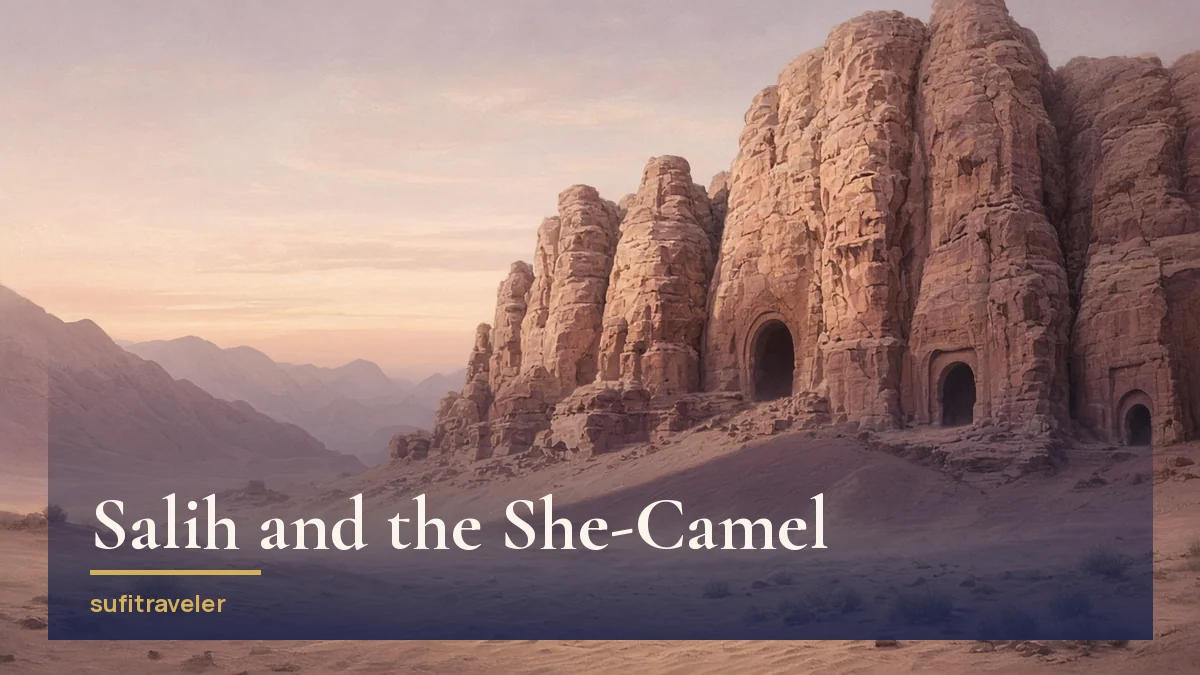
  • Thamud and the She-Camel: What Happened to Them?

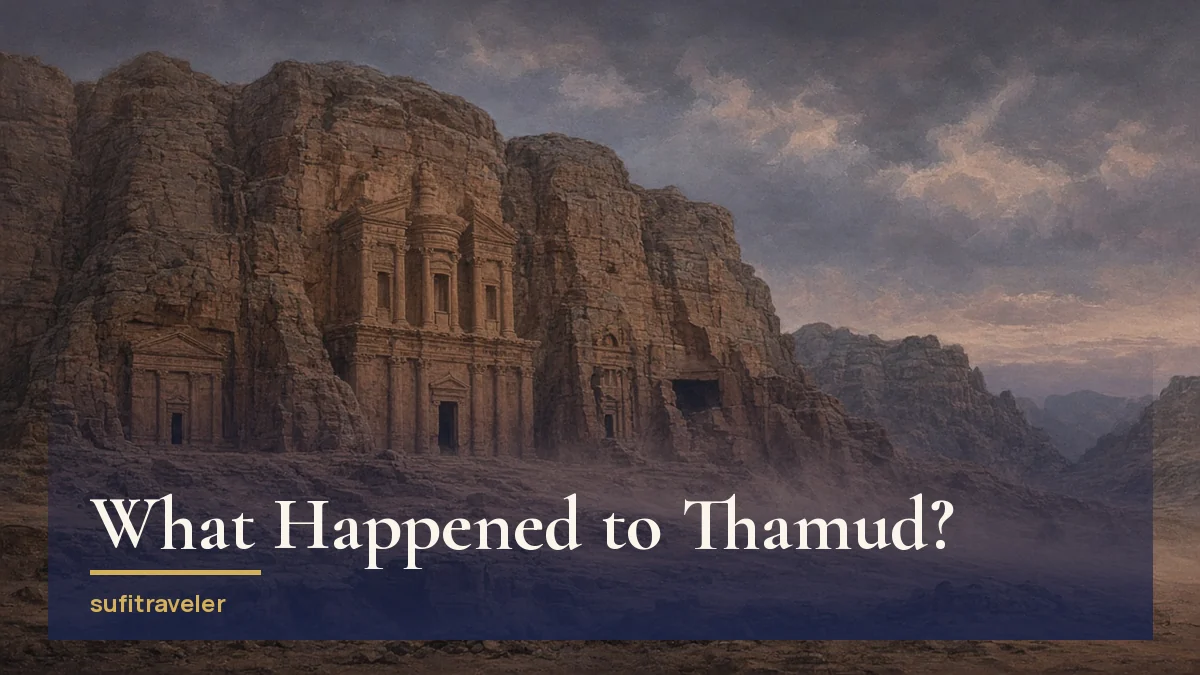
    Thamud and the She-Camel: What Happened to Them?

    Thamud had asked for a sign, and God sent one: a she-camel, with a simple command to leave her unharmed. This morning’s post told the story of Prophet Salih and the she-camel. This one asks what happened next, and why the Prophet ﷺ wanted believers to remember it.

    This is day ten of our Qur’an Stories series. The English meanings below are our own wording. It is a reflection on meaning, not a ruling.

    Quick answer

    Short answer: The most wretched of Thamud rose up and hamstrung the camel (91:12-14). Salih gave them three days (11:65). Then a single blast seized them, and they lay lifeless in their homes (54:31, 11:67). God saved Salih and the believers (11:66, 27:53).

    Where the story appears

    Where Thamud’s end is told

    • Surah ash-Shams: the most wretched one and the deed (91:11-15).
    • Surah al-Qamar: their scorn for one man among them, the shared water and the blast (54:23-31).
    • Surah an-Naml: the nine men who plotted against Salih (27:45-53).
    • Surah al-Hijr: the people of the rocky tract and their carved homes (15:80-84).

    Why did they turn on the camel?

    Surah al-Qamar shows the root of it. Thamud said, in meaning: are we to follow one man from among us? Then we would be lost. Was the message given to him alone? No, he is an arrogant liar (54:24-25).

    God answered that tomorrow they would know who the arrogant liar was. He was sending the she-camel as a trial for them, so Salih should watch them and be patient (54:26-27). The water was to be divided between them, each drinking in turn (54:28).

    Who did it?

    The Qur’an does not give his name. It calls him “the most wretched of them”, who rose up for the deed (91:12). Thamud called their companion, and he took hold and hamstrung her (54:29).

    The Qur’an puts the deed on all of them (91:14): they rejected Salih and they hamstrung her. They agreed to it, and they boasted afterwards, challenging Salih to bring what he had warned them of (7:77).

    The Prophet ﷺ once mentioned this in a sermon. He described the man who hamstrung the camel as a strong, powerful man among his people (Sahih al-Bukhari 4942, narrated by ‘Abdullah ibn Zam’a).

    What was the plot of the nine?

    Surah an-Naml adds a darker detail. In the city were nine men who spread corruption in the land and never set things right. They swore by God to attack Salih and his family by night, and then tell his heir they had not witnessed it (27:48-49).

    They planned, and God also planned, while they did not perceive it (27:50). Their plan came to nothing.

    What happened in the three days?

    After the deed, Salih told them: enjoy yourselves in your homes for three days. That is a promise that will not be broken (11:65). There was still a short space of time, a final notice.

    How the end unfolded in the Qur’an

    1

    The deed: they hamstrung the camel and defied the command (7:77).

    2

    The notice: three days in their homes (11:65).

    3

    The rescue: Salih and the believers were saved by God’s mercy (11:66).

    4

    The end: a single blast, and they lay fallen in their homes (11:67, 54:31).

    How did their end come?

    The Qur’an describes it in more than one way: a tremor seized them (7:78), and a single mighty blast struck them (54:31). Afterwards it was as if they had never lived there (11:68). The homes they carved so carefully could not protect them (15:82-84).

    Surah ash-Shams closes with a quiet line: God does not fear the outcome (91:15). Salih turned away from them, saying, in meaning: I conveyed my Lord’s message to you and advised you, but you do not love those who advise (7:79).

    What did the Prophet ﷺ teach about it?

    Passing al-Hijr with his Companions, the Prophet ﷺ told them not to enter the dwellings of those who were punished unless weeping, so that what struck them would not strike them too, and he hurried through (Sahih Muslim 2980b, narrated by ‘Abdullah ibn ‘Umar; the instruction is also in Sahih al-Bukhari 433).

    Note

    Our reflection: the lesson is not curiosity about ruins. It is a soft heart, and a fear of becoming like those who ignored a clear sign.

    Lessons for the heart

    • Silent approval counts. One man acted, but a people who called on him and shared the deed shared the blame (91:14).
    • Love those who advise you. Salih’s last words were about sincere counsel rejected (7:79).
    • God’s plan outlasts every plot (27:50).
    • Pass by with a humble heart. That was the Prophet’s ﷺ teaching.

    The series continues; browse all Qur’an Stories, or go back to Prophet Hud.

    Sources

    Verse meanings are our own wording, cross-checked for sense against standard translations: 91:11-15, 54:23-31, 27:45-53, 11:65-68, 7:77-79 and 15:80-84.

    Hadith: Sahih al-Bukhari 4942 and Sahih al-Bukhari 433 and Sahih Muslim 2980b.
  • ‘Ad and the Furious Wind: Seven Nights and Eight Days in the Qur’an

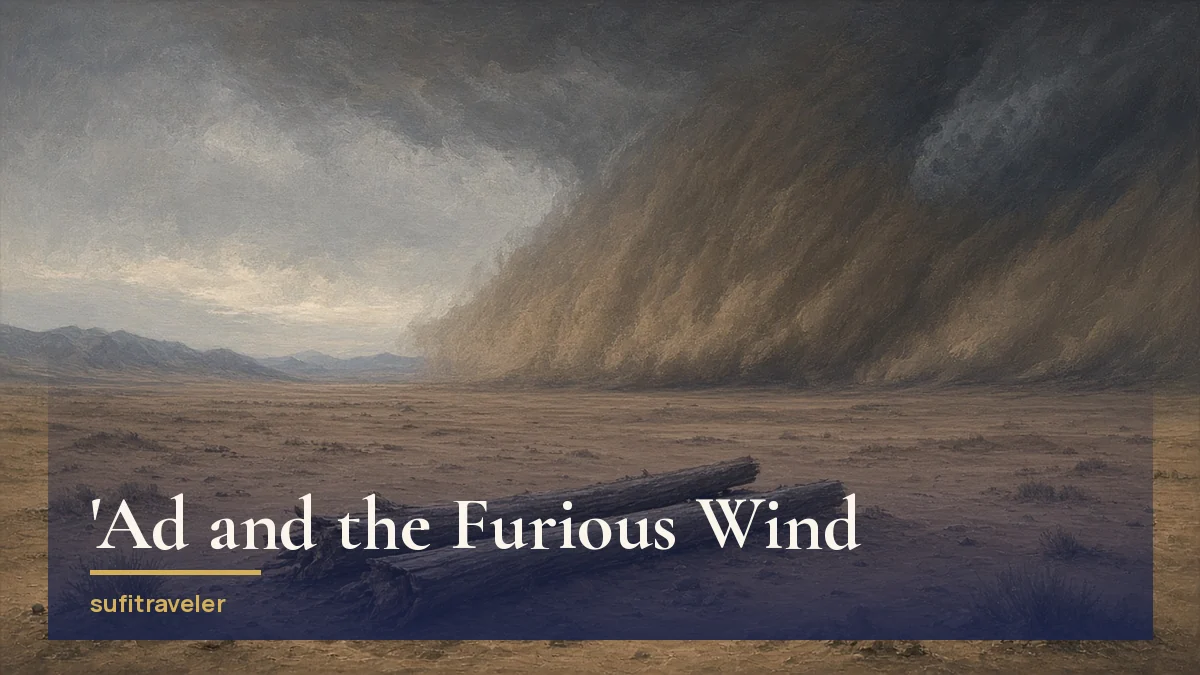
    ‘Ad and the Furious Wind: Seven Nights and Eight Days in the Qur’an

    In our last story, the Prophet Hud, peace be upon him, called the people of ‘Ad to God, and they challenged him to bring the punishment he warned of. This story picks up where that one stopped: the wind.

    This is day eight of our Qur’an Stories series. The Arabic below is the Uthmani text. The English meanings are our own wording, and the commentary comes from Ibn Kathir. It is a reflection on meaning, not a ruling.

    Quick answer

    Short answer: ‘Ad saw a cloud coming towards their valleys and rejoiced, thinking it was rain (46:24). It was a cold, roaring wind that God set upon them for seven nights and eight days without a break (69:6-7), until only their dwellings were left standing (46:25).

    Where the wind is described

    • Al-Ahqaf: the cloud they mistook for rain (46:24-25).
    • Al-Haqqah: seven nights and eight days (69:6-8).
    • Fussilat: their boast, “Who is stronger than us?” (41:15).
    • Adh-Dhariyat: the barren wind (51:41-42).
    • Al-Qamar: a day of continuous calamity (54:18-20).

    “Who is stronger than us?”

    Before the wind came, the Qur’an names the root of the problem:

    فَأَمَّا عَادٌۭ فَٱسْتَكْبَرُوا۟ فِى ٱلْأَرْضِ بِغَيْرِ ٱلْحَقِّ وَقَالُوا۟ مَنْ أَشَدُّ مِنَّا قُوَّةً

    In meaning: as for ‘Ad, they were arrogant in the land without right, and said, “Who is stronger than us?” (41:15).

    A people who trusted in their own strength were undone by something they could not see: moving air.

    The cloud they welcomed

    فَلَمَّا رَأَوْهُ عَارِضًۭا مُّسْتَقْبِلَ أَوْدِيَتِهِمْ قَالُوا۟ هَٰذَا عَارِضٌۭ مُّمْطِرُنَا

    In meaning: when they saw it as a cloud spreading across the sky, heading for their valleys, they said, “This cloud will bring us rain” (46:24).

    Ibn Kathir, on 46:24, explains why they were glad: they had been suffering a drought and needed rain, so the sight of clouds made them happy. What looked like relief was the very punishment they had dared Hud to bring.

    Warning

    Ibn Kathir, on 46:21, also passes on reports about where ‘Ad lived, such as Qatadah’s report that they were a tribe in Yemen among the sand hills. We treat these as reports, not as part of the Qur’anic text.

    Seven nights and eight days

    سَخَّرَهَا عَلَيْهِمْ سَبْعَ لَيَالٍۢ وَثَمَٰنِيَةَ أَيَّامٍ حُسُومًۭا

    In meaning: He set it upon them for seven nights and eight days, without a break (69:7).

    Ibn Kathir, on 69:6-7, gathers the early explanations of three words:

    WordMeaning reported by Ibn Kathir
    ṣarṣar (صَرْصَر)Cold (Ad-Dahhak); Ibn Kathir himself glosses it as “a cold wind”
    ʿātiyah (عَاتِيَة)Blowing severely (Qatadah, As-Suddi and others), without mercy or blessing (Ad-Dahhak)
    ḥusūm (حُسُوم)In succession, without a break (Ibn Mas’ud, Ibn ‘Abbas, Mujahid and others)
    Three words in Al-Haqqah, from Ibn Kathir

    Under the same verse he cites the Prophet’s words, peace and blessings be upon him, as reported by Ibn ‘Abbas (Sahih al-Bukhari 1035; Sahih Muslim 900): “I was helped by the east wind, and ‘Ad were destroyed by the west wind.” The same air brought victory to one and ruin to others, by God’s command.

    A barren wind

    وَفِى عَادٍ إِذْ أَرْسَلْنَا عَلَيْهِمُ ٱلرِّيحَ ٱلْعَقِيمَ

    In meaning: in ‘Ad, too, there is a sign, when We sent against them the barren wind (51:41).

    Wind normally carries clouds and pollen and brings life. Ibn Kathir, on 51:41, reports from Ad-Dahhak and Qatadah that this wind was barren: it destroyed and produced nothing.

    Is any of them left?

    فَهَلْ تَرَىٰ لَهُم مِّنۢ بَاقِيَةٍۢ

    In meaning: do you see any trace of them remaining? (69:8). Surah al-Ahqaf ends the scene the same way: they became such that nothing could be seen except their homes (46:25). Surah al-Qamar calls it a day of continuous calamity (54:19), and then asks, in meaning, how was My punishment and My warning? (54:18).

    Reading these verses for yourself

    1

    Read 46:24-25 slowly and notice the moment hope turns to fear.

    2

    Read 69:6-8 and picture the seven nights and eight days.

    3

    Read 41:15 and ask where you rely on your own strength.

    4

    Finish with 54:17, which reminds you the Qur’an is made easy to remember.

    Lessons for the heart

    Reflections

    • What looks like rain may be a test, and what looks like hardship may be mercy.
    • Strength without humility is the boast of ‘Ad: “Who is stronger than us?”
    • Wind is a servant of its Lord. It moves “by the command of its Lord” (46:25).
    • Asking to hurry punishment is never wise. Ask instead for forgiveness, as Hud invited them to.

    Tip

    Read this story with the Hud story open alongside it. The call comes first, then the wind. Together they show how patient the warning was before the end came.

    Sources

    Arabic: quran-uthmani text from the alquran.cloud API, fetched 31 Oct 2026. Meanings are our own wording: 41:15, 46:24-25, 51:41-42, 54:18-20, 69:6-8.

    Commentary: Tafsir Ibn Kathir (Abridged, English), on 46:21, 46:24, 51:41 and 69:6-7 (Quran.com), read 31 Oct 2026.

  • Prophet Salih and the She-Camel: Why Was It a Test?

    Prophet Salih and the She-Camel: Why Was It a Test?

    After ‘Ad came another strong nation: Thamud. They carved homes into mountains and lived among gardens and springs. God sent them their brother Salih, peace be upon him, and gave them a sign they could see with their own eyes: a she-camel.

    This is day nine of our Qur’an Stories series. Earlier we followed Prophet Hud and the people of ‘Ad. Here we ask a simple question: why was the she-camel a test? The English meanings below are our own wording. It is a reflection on meaning, not a ruling.

    Quick answer

    Short answer: Salih called Thamud to worship God alone (11:61). They asked for a sign, and God sent a she-camel with a share of water on fixed days (26:154-155). They were told not to harm her (7:73). The camel was a clear sign, and signs are sent as a warning (17:59).

    Where the story appears

    Where Salih appears in the Qur’an

    • Surah al-A’raf: Salih’s call and the sign of the she-camel (7:73-79).
    • Surah Hud: his hopes for his people and their doubt (11:61-68).
    • Surah ash-Shu’ara: their comforts, their demand for a sign and the shared water (26:141-159).
    • Surah al-Isra: the she-camel named as a visible sign (17:59).

    Who were Thamud?

    The Qur’an tells us that God made Thamud successors after ‘Ad and settled them in the land. They built palaces on its plains and carved houses out of the mountains (7:74). They had gardens, springs, crops and palms with soft, tender clusters (26:146-148).

    Salih reminded them that it was God who brought them out of the earth and settled them in it (11:61). Their skill was real, but it was a gift, not their own making alone.

    What did Salih ask of them?

    His message was the same as Hud’s before him: worship God, you have no god but Him. Ask His forgiveness and turn back to Him, for He is near and answers (11:61).

    Like every prophet, he asked no payment. In meaning (our words): I ask you for no reward for this; my reward is only with the Lord of the worlds (26:145). He also warned them not to obey the extravagant, who spread corruption and never set things right (26:151-152).

    Why did his people doubt him?

    Their answer is striking. They said, in meaning (our words): Salih, you were someone we looked to before this (11:62). They had placed their hopes in him. Now he was asking them to leave what their fathers worshipped, and they said they were in deep doubt about his call.

    They also called him bewitched and said he was only a man like them (26:153-154). Then they asked for proof: bring us a sign, if you are truthful.

    Why a she-camel?

    God answered their request. Salih said, in meaning (our words): this is the she-camel of God, a sign for you. Leave her to graze on God’s earth and do not touch her with harm, or a painful punishment will seize you (7:73, 11:64).

    She came with a rule. She would have her share of water, and they would have theirs, each on a known day (26:155). The Qur’an calls her a clear sign, and says signs are sent only to warn (17:59).

    They asked forThe test asked them to
    A visible sign (26:154)Believe what they had seen
    Proof of Salih’s truthLeave her free to graze (7:73)
    Something to settle their doubt (11:62)Share their water on fixed days (26:155)
    What they asked for and what the test asked of them

    What made it a test?

    Our reflection: the sign did not ask them to do anything hard. It asked them to hold back. Leave her alone. Share the water. Sometimes the real test is not doing more, but making room for what God has placed among us.

    The Qur’an also shows a split among the people. The proud chiefs asked the weaker believers whether they truly thought Salih was sent by his Lord. The believers said yes, they believed in his message. The proud said they rejected it (7:75-76).

    Tip

    A small habit from this story: when you ask God for a sign or an answer, be ready to act on it when it comes.

    How did it end?

    In one line: they hamstrung the camel and defied God’s command (7:77), and God saved Salih and the believers by His mercy (11:66). We tell what happened to Thamud in full in our next story.

    Lessons for the heart

    • Gifts point to the Giver. Homes, gardens and skill all came from God.
    • Signs bring responsibility. Asking for proof means being ready to follow it.
    • Restraint can be worship. The command was simply: do not harm her.
    • God is near. Salih told them, in meaning (our words): my Lord is near and answers (11:61).

    Sources

    Verse meanings are our own wording, cross-checked for sense against standard translations: 7:73-79, 11:61-68, 26:141-159 and 17:59.

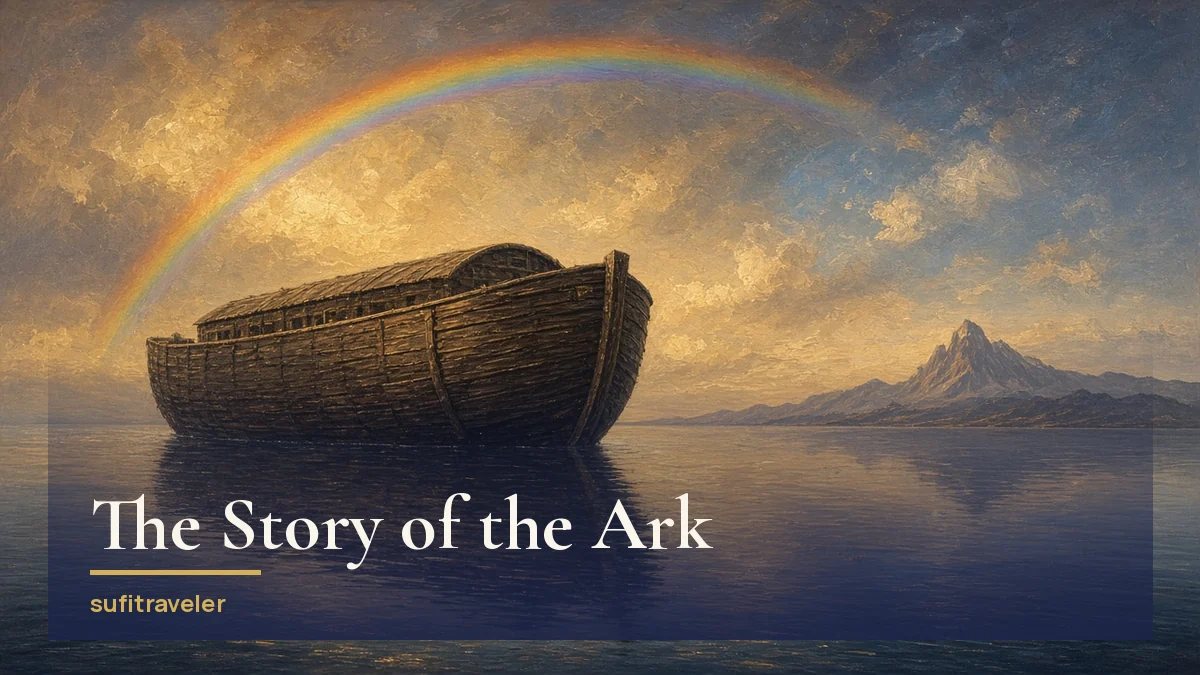
  • The People of Nuh and the Flood: How the Qur’an Tells the Story

    The People of Nuh and the Flood: How the Qur’an Tells the Story

    For nine hundred and fifty years Nuh, peace be upon him, called his people, and most of them mocked him. The sky opened, the earth burst with springs, and a small ship carried a few believers through “waves like mountains”.

    This is day six of our Qur’an Stories series. The previous story covered Nuh’s call and the building of the Ark. This one follows the Flood itself, using the verses on Quran.com and the explanation of Ibn Kathir. It is a reflection on meaning, not a ruling.

    Quick answer

    Short answer: When God’s command came, Nuh was told to load “of each [creature] two mates and your family” and the believers, who were “a few” (11:40). His son refused to board and was drowned (11:42-43). Then the earth swallowed its water and the ship “came to rest on the [mountain of] Judiyy” (11:44). The Qur’an calls it “a sign for the worlds” (29:15).

    Where the story appears

    Where the Flood appears in the Qur’an

    • Surah Hud: the boarding, the son, al-Judi and Nuh’s plea for his son (11:40-48).
    • Surah al-Qamar: the gates of heaven, the springs and the ship of “planks and nails” (54:9-17).
    • Surah Nuh: Nuh’s final prayer against the deniers (71:25-28).
    • Surah ash-Shu’ara: “judge between me and them” and “the laden ship” (26:117-120).
    • Surah al-‘Ankabut: “a sign for the worlds” (29:14-15).

    “I am overpowered, so help”

    By the end, the people of Nuh had called him “a madman” and driven him back (54:9).

    So Nuh turned to his Lord with one of the shortest prayers in the Qur’an: “Indeed, I am overpowered, so help” (54:10). Ibn Kathir explains it as: I am weak and cannot resist my people, so help Your religion.

    The gates of heaven open

    The answer came in a single image. “Then We opened the gates of the heaven with rain pouring down, and caused the earth to burst with springs, and the waters met for a matter already predestined” (54:11-12).

    Surah Hud adds a sign: “the oven overflowed” (11:40). Ibn Kathir reports from Ibn ‘Abbas that the tannur here means the face of the earth. Water gushed from every place, even the places where fire was normally lit.

    Who boarded the Ark

    Nuh was told: “Load upon it of each [creature] two mates and your family, except those about whom the word has preceded, and [include] whoever has believed.” Then the verse adds, simply: “But none had believed with him, except a few” (11:40).

    As they boarded, Nuh said: “Embark therein; in the name of Allah [are] its course and its anchorage” (11:41). Surah al-Qamar calls the ship “a [construction of] planks and nails”, sailing “under Our observation” (54:13-14).

    The son who stayed behind

    The most painful moment of the story is a conversation between a father and his son. “It sailed with them through waves like mountains, and Noah called to his son who was apart [from them], ‘O my son, come aboard with us and be not with the disbelievers’” (11:42).

    The son answered: “I will take refuge on a mountain to protect me from the water.” Nuh replied: “There is no protector today from the decree of Allah, except for whom He gives mercy.” Then “the waves came between them, and he was among the drowned” (11:43).

    Ibn Kathir notes that the “family” excepted in 11:40 were those of Nuh’s household who did not believe, among them this son and Nuh’s wife. The Qur’an itself names the wife of Nuh as an example of those who disbelieved (66:10).

    The water subsides and the ship rests

    Then came the end of the Flood. “O earth, swallow your water, and O sky, withhold [your rain].” The water subsided, “the matter was accomplished”, and the ship “came to rest on the [mountain of] Judiyy. And it was said, ‘Away with the wrongdoing people’” (11:44).

    Ibn Kathir passes on a saying from Mujahid that al-Judi is a mountain in al-Jazirah, the upper Mesopotamia region. The Qur’an names the mountain but does not say where it is.

    “He is not of your family”

    After the Flood, Nuh spoke to his Lord about his son. “My Lord, indeed my son is of my family; and indeed, Your promise is true; and You are the most just of judges” (11:45).

    The answer was firm and gentle at once: “O Noah, indeed he is not of your family; indeed, he is [one whose] work was other than righteous, so ask Me not for that about which you have no knowledge” (11:46).

    Ibn Kathir explains that the promise was to save those of Nuh’s family who believed. He reports from Ibn ‘Abbas that the boy was truly Nuh’s son, but opposed him in deeds and intention. Nuh at once sought refuge and forgiveness (11:47), and was told to “disembark in security” (11:48).

    Close by bloodClose by faith
    WhoNuh’s son and wifeThe few who believed
    What they didRefused the callBoarded with Nuh
    Outcome in the versesAmong the drowned (11:43)Saved in the ship (26:119)
    Two kinds of closeness in the story

    Nuh’s final prayer

    Surah Nuh records his prayer as the story closed. The deniers “were drowned and put into the Fire, and they found not for themselves besides Allah [any] helpers” (71:25).

    Nuh asked that none of the deniers be left on the earth, “if You leave them, they will mislead Your servants” (71:26-27). Ibn Kathir says Nuh said this from what he knew of them after nine and a half centuries. He closed with a prayer of forgiveness for “the believing men and believing women” (71:28).

    Warning

    A note on disputed reports. Ibn Kathir passes on a report from Ibn ‘Abbas that about eighty people were on board, and names the son as Yam. Some reports mention which birds and animals boarded first and last, and some say the Ark stayed visible on al-Judi for early generations. The Qur’an says only “a few” and gives no names or numbers. Scholars also differ on how far the Flood reached. These details are reports, some from earlier scriptures (Isra’iliyyat), and we mention them only as reports, not as fact.

    Lessons for the heart

    • Mockery doesn’t delay God’s decree. The chiefs laughed at a ship on dry land until the water came.
    • Kinship can’t save the one who refuses. Even a prophet’s son was “among the drowned”.
    • Turn to God in weakness. “I am overpowered, so help” is a prayer anyone can make.

    What comes next

    The series moves on to the nations that came after Nuh. Until then, browse the Qur’an Stories series.

    Sources

    Verse wording: Saheeh International, ranges linked above, each opened 28 Oct 2026: 11:36-48, 54:9-17, 71:21-27 (with 71:28), 26:116-120, 29:14-15 and 66:10. Tafsir: Ibn Kathir on 11:40, 11:44, 11:45, 54:11 and 71:26.

  • Prophet Nuh and the Ark: 950 Years of Calling His People to God

    Prophet Nuh and the Ark: 950 Years of Calling His People to God

    Nuh, peace be upon him, called his people to worship God alone for nearly a thousand years. He spoke to them in public and in private, by night and by day. Most of them turned away. Then God told him to build a ship on dry land, and the mockery only grew louder.

    This is day five of our Qur’an Stories series. We follow the verses on Quran.com and the explanation of Ibn Kathir. This post covers Nuh’s call and the building of the Ark. The Flood itself is the next story in the series. This is a reflection on meaning, not a ruling.

    Quick answer

    Short answer: The Qur’an says Nuh “remained among them a thousand years minus fifty years” (29:14), calling his people “night and day” (71:5). Their leaders called him “a man like ourselves” and mocked his followers (11:27). God then revealed that no more of them would believe, and told him: “construct the ship under Our observation and Our inspiration” (11:37).

    Where the story appears

    Key passages

    • Surah Nuh: his whole method of calling, in his own words (71:1-12) and his complaint to God (71:21-24).
    • Surah Hud: the argument with the leaders (11:25-28, 11:32-34) and the building of the Ark (11:36-39).
    • Surah ash-Shu’ara: “I do not ask you for it any payment” (26:105-118).
    • Surah al-Mu’minun: “if Allah had willed… He would have sent down angels” (23:23-24).
    • Length of his mission: “a thousand years minus fifty years” (29:14).

    The call: night and day, open and secret

    Surah Nuh opens with God sending Nuh to “warn your people before there comes to them a painful punishment” (71:1). His message was simple: “worship Allah, fear Him and obey me”, with a promise attached: “He will forgive you of your sins” (71:3-4).

    Then Nuh tells God, in his own words, how he went about it. “My Lord, indeed I invited my people night and day. But my invitation increased them not except in flight” (71:5-6). Every time he called them, “they put their fingers in their ears, covered themselves with their garments, persisted, and were arrogant” (71:7). So he changed his approach. “Then I invited them publicly. Then I announced to them and also confided to them secretly” (71:8-9).

    He even spoke to their worldly hopes: ask forgiveness, and God would “send rain from the sky upon you” and “give you increase in wealth and children” (71:10-12).

    Ibn Kathir explains that Nuh “presented the clear call… and the comprehensive invitation in various ways”, sometimes by encouragement and sometimes by warning. Nuh adapted his method; he never changed his message.

    The leaders’ objections

    The Qur’an gives the chiefs’ arguments in their own words, and they still sound familiar. “We do not see you but as a man like ourselves,” they said, “and we do not see you followed except by those who are the lowest of us” (11:27). Elsewhere: “if Allah had willed to send a messenger, He would have sent down angels. We have not heard of this among our forefathers” (23:24).

    Nuh’s answer was gentle and firm. He would not drive away the poor believers: “I am not one to drive away the believers. I am only a clear warner” (26:114-115). He asked them for nothing: “I do not ask you for it any payment. My payment is only from the Lord of the worlds” (26:109). He would not force faith on anyone: “should we force it upon you while you are averse to it?” (11:28).

    In the end the leaders dared him: “bring us what you threaten us, if you should be of the truthful” (11:32). They threatened him too: “If you do not desist, O Noah, you will surely be of those who are stoned” (26:116).

    The idols of Nuh’s people

    Nuh’s complaint names the idols his people refused to leave: “Never leave Wadd or Suwa’ or Yaghuth and Ya’uq and Nasr” (71:23). Ibn Kathir cites a report in Sahih al-Bukhari from Ibn ‘Abbas (Bukhari 4920): these “were all named after righteous men from the people of Nuh”. After those men died, people made images to remember them, and later generations came to worship them.

    The worship of idols began not with hatred of good people but with exaggerated love for them.

    950 years

    Surah al-‘Ankabut says Nuh “remained among them a thousand years minus fifty years” (29:14). Ibn Kathir explains that God told this to the Prophet Muhammad, peace be upon him, as consolation. If Nuh kept calling for so long with so few responding, a caller today shouldn’t despair at slow results.

    Ibn Kathir also reports a view from Ibn ‘Abbas that Nuh was sent at forty and lived some years after the Flood. Scholars report different figures for his total age. The Qur’an’s own figure is the time he spent among his people, and that is the one we rely on here.

    “Construct the ship”

    At last the waiting ended. God revealed: “No one will believe from your people except those who have already believed, so do not be distressed by what they have been doing. And construct the ship under Our observation and Our inspiration” (11:36-37). Ibn Kathir explains “under Our eyes” as “under Our vision”, and “Our revelation” as “We will teach you what to do”.

    So Nuh built a ship far from any sea. “Whenever an assembly of the eminent of his people passed by him, they ridiculed him.” He replied: “If you ridicule us, then we will ridicule you just as you ridicule. And you are going to know who will get a punishment that will disgrace him” (11:38-39).

    Warning

    A note on reports. Ibn Kathir passes on a report from Muhammad ibn Ishaq, “from the Tawrah”, giving the Ark’s wood, its measurements in cubits and three decks. Reports like this come from earlier scriptures (Isra’iliyyat). Scholars treat them as neither confirmed nor denied, and the Qur’an gives no measurements. We mention it only as a report, not as fact.

    Lessons for the heart

    • Keep calling, change the method. Nuh tried public and private, hope and warning.
    • Don’t measure truth by who follows it. The chiefs mocked the believers for being poor, and Nuh refused to turn them away.
    • Sincerity asks for nothing. “My payment is only from the Lord of the worlds.”

    What comes next

    The next story in the series turns to the Flood itself: the boarding, Nuh’s son, and the ship coming to rest. Until then, browse the full Qur’an Stories series, or go back to the first story, Iblis and Adam.

    Sources

    Verse wording: Saheeh International, ranges linked above, checked 25 Oct 2026. Tafsir: Ibn Kathir on 11:37, 29:14 and 71:23. Hadith: Sahih al-Bukhari 4920.

  • Prophet Idris in the Qur’an: Utterly Truthful, Patient and Lifted to a Lofty Place

    Prophet Idris in the Qur’an: Utterly Truthful, Patient and Lifted to a Lofty Place

    Some prophets fill whole surahs. Idris appears in just four verses. The Qur’an tells us no events from his life, no dialogue and no people he was sent to. What it gives instead is a short portrait of character: truthful, patient, righteous, and honoured by God.

    This is day four of our Qur’an Stories series. We read the verses in Arabic on Quran.com, give their meaning in plain English, and follow the explanation of Ibn Kathir. This is a reflection on meaning, not a ruling.

    Quick answer

    Short answer: The Qur’an says of Idris that “he was utterly truthful, a prophet. And We lifted him to a lofty place” (19:56-57). It also names him with Isma’il and Dhu’l-Kifl: “each of them was among those who endure with patience… they were truly among the righteous” (21:85-86). Scholars differ on what “a lofty place” means; Ibn Kathir reports views including the fourth heaven and Paradise.

    Where Idris appears in the Qur’an

    Key takeaways

    • Passages: 19:56-57 in Surah Maryam and 21:85-86 in Surah al-Anbiya.
    • Described as: “utterly truthful, a prophet.”
    • Listed among: “those who endure with patience” and “the righteous.”
    • Honour: “We lifted him to a lofty place.”

    The Qur’an does not tell us when he lived, where, or to whom he was sent. In keeping with this series, we do not fill those gaps.

    “Utterly truthful, a prophet”

    Surah Maryam brings a run of prophets before the reader, each with a command to remember. For Idris it says (19:56):

    وَٱذْكُرْ فِى ٱلْكِتَـٰبِ إِدْرِيسَ ۚ إِنَّهُۥ كَانَ صِدِّيقًا نَّبِيًّا

    Meaning: Recall in the Scripture Idris: he was utterly truthful, a prophet.

    The Arabic word is siddiq, from sidq, truthfulness. It describes someone whose truth runs through speech, intention and action. Ibn Kathir notes that Allah praised Idris as truthful and a prophet, and told of raising him to a high place (Tafsir Ibn Kathir, 19:56).

    “We lifted him to a lofty place”

    The next verse is just as short (19:57):

    وَرَفَعْنَـٰهُ مَكَانًا عَلِيًّا

    Meaning: And We lifted him to a lofty place.

    The verse itself does not explain what the lifting was.

    ViewReported fromNote
    The fourth heavenMujahid, via Ibn KathirLinked to the Night Journey hadith below
    ParadiseAl-Hasan and others, via Ibn KathirAlso reported in Ibn Kathir’s tafsir
    How the commentators read 19:57

    Both views are recorded by Ibn Kathir. We present them side by side, as he does, without choosing between them.

    The Night Journey hadith

    In the hadith of the Isra and Mi’raj, in the fourth heaven the Prophet ﷺ greeted Idris, who said: “Welcome, brother and prophet.” (Sahih al-Bukhari 3207, graded sahih). A narration in Sahih Muslim 162a, also sahih, mentions Idris in the fourth heaven and then quotes 19:57.

    “Among those who endure with patience”

    Surah al-Anbiya mentions Idris again, this time in a group (21:85-86):

    وَإِسْمَـٰعِيلَ وَإِدْرِيسَ وَذَا ٱلْكِفْلِ ۖ كُلٌّ مِّنَ ٱلصَّـٰبِرِينَ

    Meaning: And Isma’il, Idris and Dhu’l-Kifl: each of them was among those who endure with patience.

    وَأَدْخَلْنَـٰهُمْ فِى رَحْمَتِنَآ ۖ إِنَّهُم مِّنَ ٱلصَّـٰلِحِينَ

    Meaning: We brought them into Our mercy; they were truly among the righteous.

    The order is worth noticing. Enduring with patience comes first, then being brought into God’s mercy, then the description of righteousness. The verses do not say what each one was patient through.

    What we leave out

    Many older books add details about Idris: that he was the biblical Enoch, the first to write with a pen or sew clothes, or stories of how he was taken up. Some English translations even render his name in these verses as “Enoch”; the Arabic says Idris, and the link is not established. These details come largely from Isra’iliyyat (reports from earlier traditions) and cannot be confirmed from the Qur’an or sahih hadith. This series does not present them as fact.

    Truthfulness and patience together

    Read together, the two passages give us a small but complete picture. In Surah Maryam, Idris is utterly truthful. In Surah al-Anbiya, he is among those who endure with patience. Truth without patience can turn harsh, and patience without truth can become mere silence. Together they mark a servant God chose to raise.

    Lessons for the traveller of the heart

    Four reflections from Idris

    1

    Be known for truth: the first thing said of him is that he was siddiq, utterly truthful.

    2

    Hold steady: he is counted among “those who endure with patience.”

    3

    Seek mercy, not fame: “We brought them into Our mercy.”

    4

    Let God raise you: the verse says “We lifted him.” Rank is a gift, not a grab.

    Tip

    For a later, well-documented story of truthfulness, read our post on Ka’b ibn Malik and how telling the truth saved him. A short evening muhasaba is a gentle way to check your own words each day.

    FAQ

    Where is Prophet Idris mentioned in the Qur’an?

    In Surah Maryam, 19:56-57, and Surah al-Anbiya, 21:85-86.

    What does “lifted to a lofty place” mean?

    The verse does not say. Ibn Kathir reports that Mujahid said it means the fourth heaven and that al-Hasan and others said it means Paradise.

    Is Idris the same as Enoch?

    The Qur’an does not say so. The link comes from later reports, and it is not confirmed by the Qur’an or sahih hadith.

    Last checked: 26 October 2026 (Asia/Riyadh) against Qur’an 19:56-57 and 21:85-86 (Arabic text verified against the Uthmani text on Quran.com; English meanings are our own plain rendering), Tafsir Ibn Kathir (Abridged) for 19:56, Sahih al-Bukhari 3207 and Sahih Muslim 162a. Educational reflection only, not a religious ruling.

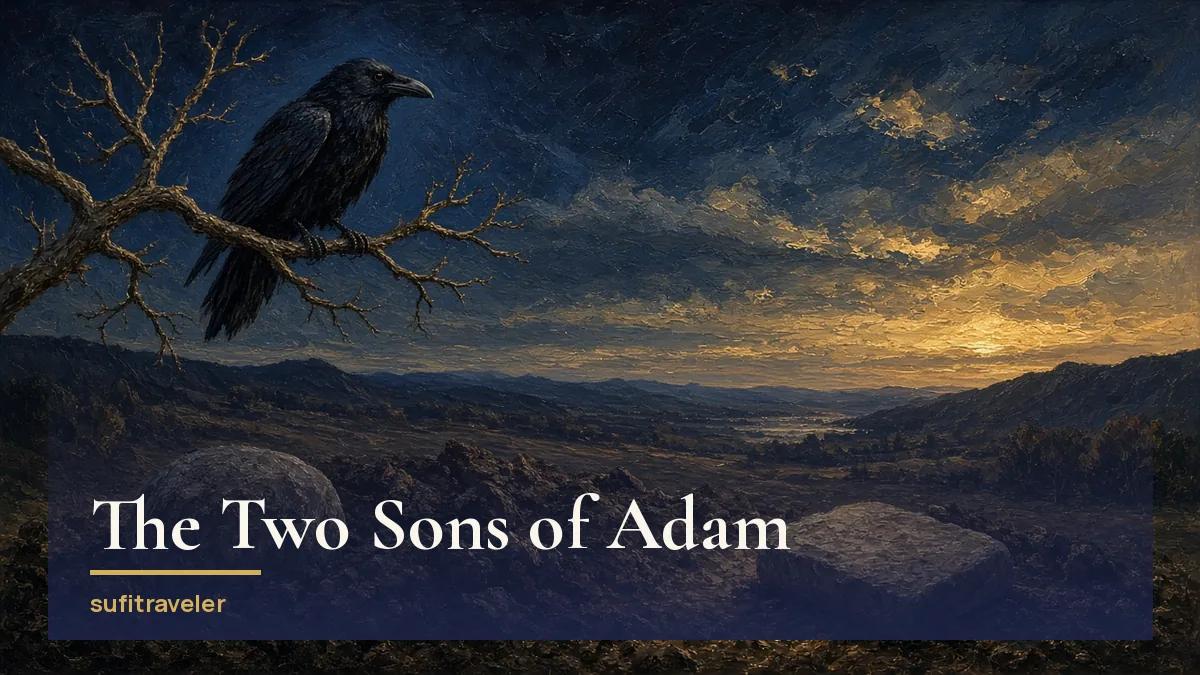
  • The Two Sons of Adam: The Qur’an’s Story of Envy and the Crow

    The Two Sons of Adam: The Qur’an’s Story of Envy and the Crow

    The story of the two sons of Adam is short. It takes only six verses of Surah al-Ma’idah. Yet it holds the first killing in human history, the first grave and one of the most quoted principles in the Qur’an: that taking one innocent life is like killing all of humanity.

    This is day three of our Qur’an Stories series. The earlier stories showed pride in Iblis and repentance in Adam. Here the same struggle passes to the next generation. We read the verses on Quran.com in the Saheeh International translation and follow the explanation of Ibn Kathir. This is a reflection on meaning, not a ruling.

    Quick answer

    Short answer: Two sons of Adam each made an offering to God; “it was accepted from one of them but was not accepted from the other” (Qur’an 5:27). The rejected brother threatened to kill the other, who refused to fight back. He killed him anyway, then watched a crow scratch the ground and learned how to bury his brother. The passage ends with the principle that “whoever kills a soul… it is as if he had slain mankind entirely” (5:32).

    Where the story appears in the Qur’an

    Key takeaways

    • Passage: 5:27-32, in Surah al-Ma’idah, the only place the story is told.
    • Characters: “Adam’s two sons.” The Qur’an does not name them.
    • Turning point: one offering accepted, one not, and envy in response.
    • Principle: one life carries the weight of all humanity (5:32).

    What were their names?

    The names Habil and Qabil (Abel and Cain) are not in the Qur’an. They come from tafsir and from earlier traditions. Ibn Kathir uses them in his tafsir of 5:27, as many early commentators did. In this post we simply say “the two sons,” as the Qur’an does.

    “Recite to them the story, in truth”

    The passage opens with a command to the Prophet ﷺ: “And recite to them the story of Adam’s two sons, in truth” (5:27). Ibn Kathir explains that “in truth” means told clearly, without change, addition or confusion.

    Two offerings

    “They both made an offering [to Allāh], and it was accepted from one of them but was not accepted from the other” (5:27). The Qur’an does not say what the offerings were, how acceptance was shown, or what led to them.

    Commentators report a longer background involving a dispute over marriage. Ibn Kathir records these reports, but they rest on narrations from earlier traditions, and scholars differ on them. We leave them aside and keep to what the verses say.

    The verses do give one reason, in the words of the accepted brother: “Indeed, Allāh only accepts from the righteous [who fear Him].” Acceptance depends on the heart of the giver, not on the size of the gift.

    “I shall not raise my hand”

    The rejected brother answered with a threat: “I will surely kill you.” His brother’s reply is one of the most striking in the Qur’an: “If you should raise your hand toward me to kill me – I shall not raise my hand toward you to kill you. Indeed, I fear Allāh, Lord of the worlds” (5:28).

    He added a warning: “I want you to obtain [thereby] my sin and your sin so you will be among the companions of the Fire. And that is the recompense of wrongdoers” (5:29).

    The accepted brotherThe rejected brother
    Response to the outcomePointed to taqwa: God accepts from the righteousEnvy and a threat
    Response to the threat“I shall not raise my hand”Let his soul make the murder seem acceptable
    What he fearedGod, Lord of the worldsLosing to his brother
    EndSpoke the truth to the last“Became among the losers” and “of the regretful”
    Two brothers, two hearts

    “His soul permitted to him”

    “And his soul permitted to him the murder of his brother, so he killed him and became among the losers” (5:30). The wording is precise. It was his own soul that made the crime seem acceptable to him.

    The crow

    “Then Allāh sent a crow searching [i.e., scratching] in the ground to show him how to hide the disgrace of his brother” (5:31).

    His words afterwards are full of bitterness: “O woe to me! Have I failed to be like this crow and hide the disgrace [i.e., body] of my brother?” The verse ends, “And he became of the regretful.” The Qur’an records his regret, but it does not describe him turning to God, which sets this regret apart from Adam’s repentance in the story before.

    What we leave out

    Many details in older books, such as how long he carried the body, where it happened, or what punishment followed in this life, come from Israiliyat (reports from earlier traditions). They cannot be confirmed, so this series does not present them as fact.

    One life, all of humanity

    The story closes with a principle: “Because of that, We decreed upon the Children of Israel that whoever kills a soul unless for a soul or for corruption [done] in the land – it is as if he had slain mankind entirely. And whoever saves one – it is as if he had saved mankind entirely” (5:32).

    Ibn Kathir explains in his tafsir of 5:32 that this is because there is no difference between one life and another. Whoever protects a single innocent life, and holds it sacred, has in effect kept all people safe from himself.

    Lessons for the traveller of the heart

    Four reflections from the story

    1

    Look at the heart, not the gift: “Allāh only accepts from the righteous.”

    2

    Watch envy early: the killing began as resentment of someone else’s blessing.

    3

    Refuse to answer wrong with wrong: the accepted brother held back his hand out of fear of God.

    4

    Know regret from repentance: sorrow for the consequences is not the same as turning back to God.

    Tip

    Envy is cured by good character. When you notice it, pray for the person you envy. See our post on good character (husn al-khuluq), and try a short evening muhasaba.

    FAQ

    Where is the story of the two sons of Adam in the Qur’an?

    In Surah al-Ma’idah, 5:27-32.

    Does the Qur’an name the two sons of Adam?

    No. The names Habil and Qabil come from tafsir and earlier traditions, not from the Qur’an.

    Last checked: 23 October 2026 (Asia/Riyadh) against Qur’an 5:27-32 (Saheeh International translation) and Tafsir Ibn Kathir (Abridged) for 5:27 and 5:32. Educational reflection only, not a religious ruling.

  • Adam and the Forbidden Tree: The Qur’an’s First Story of Repentance

    Adam and the Forbidden Tree: The Qur’an’s First Story of Repentance

    The story of Prophet Adam and the forbidden tree is the first account in the Qur’an of a human being who slips and then turns back to God. It is told in three surahs: al-Baqarah, al-A’raf and Ta-Ha.

    This is day two of our Qur’an Stories series. Day one told how Iblis refused to bow to Adam out of pride. We read the verses on Quran.com in the Saheeh International translation and follow the explanation of Ibn Kathir. This is a reflection on meaning, not a ruling.

    Quick answer

    Short answer: God told Adam, “dwell, you and your wife, in Paradise and eat therefrom in [ease and] abundance from wherever you will. But do not approach this tree” (Qur’an 2:35). Satan whispered to them and swore he was a sincere adviser. They ate, realised their mistake and said, “Our Lord, we have wronged ourselves” (7:23). God accepted Adam’s repentance and sent them down to earth with a promise of guidance.

    Where the story appears in the Qur’an

    Key takeaways

    • The garden, the slip and the words of repentance: 2:35-39, in Surah al-Baqarah.
    • Satan’s whisper, his oath and Adam’s prayer: 7:19-25, in Surah al-A’raf.
    • The forgotten promise and “the tree of eternity”: 20:115-123, in Surah Ta-Ha.
    • Lesson: a slip followed by sincere repentance becomes a return to God.

    Life in the garden

    After the angels’ prostration, God gave Adam and his wife a home of ease. In Surah Ta-Ha He describes it: “Indeed, it is [promised] for you not to be hungry therein or be unclothed. And indeed, you will not be thirsty therein or be hot from the sun” (20:118-119).

    Ibn Kathir, in his tafsir of 20:115, notes that these pairs cover inner and outer hardship alike.

    There was only one limit. “Do not approach this tree, lest you be among the wrongdoers” (7:19). Ibn Kathir describes this command as a test.

    Which tree was it?

    The Qur’an does not name the tree, and neither does the authentic Sunnah. Older commentators suggested grapes, wheat, figs and other plants, so scholars differ. Ibn Kathir, in his tafsir of 2:35, agrees with Ibn Jarir al-Tabari that the correct view is that we do not know. The name of Adam’s wife, Hawwa’, likewise comes from hadith and tafsir, not the Qur’an.

    The whisper

    Satan did not attack in the open. “Satan whispered to them,” the Qur’an says, and he offered them something that sounded good: “Your Lord did not forbid you this tree except that you become angels or become of the immortal” (7:20). In Ta-Ha he calls it “the tree of eternity and possession that will not deteriorate” (20:120).

    Then he added an oath: “Indeed, I am to you from among the sincere advisors” (7:21). Ibn Kathir comments in his tafsir of 7:20 that a believer can sometimes be taken in by deceit, especially when it is sworn in God’s name.

    What God saidWhat Satan said
    About the tree“Do not approach this tree”It brings eternity and a kingdom that never fades
    About Satan“Indeed this is an enemy to you”“I am to you from among the sincere advisors”
    God’s word and Satan’s whisper

    The slip

    “So he made them fall, through deception” (7:22). As soon as they tasted the tree, “their private parts became apparent to them, and they began to fasten together over themselves from the leaves of Paradise.”

    Surah Ta-Ha names the slip directly: “And Adam disobeyed his Lord and erred” (20:121). It also gives its cause: “We had already taken a promise from Adam before, but he forgot; and We found not in him determination” (20:115).

    The words of repentance

    Here is the point where Adam’s story parts from the story of Iblis. Iblis argued and asked for a delay. Adam and his wife admitted the wrong at once: “Our Lord, we have wronged ourselves, and if You do not forgive us and have mercy upon us, we will surely be among the losers” (7:23).

    Surah al-Baqarah says, “Then Adam received from his Lord [some] words, and He accepted his repentance. Indeed, it is He who is the Accepting of Repentance, the Merciful” (2:37). In his tafsir of 2:37, Ibn Kathir reports that many early scholars, among them Mujahid, Sa’id ibn Jubayr and Qatadah, said these “words” were the prayer of 7:23. Other reports give different wording, so scholars differ on the exact words, but they agree that God taught them and then accepted them.

    How the return unfolds in the verses

    1

    Admit: “we have wronged ourselves” (7:23).

    2

    Ask: for forgiveness and mercy, naming the loss without it.

    3

    Receive: God gives the words and accepts the repentance (2:37).

    4

    Be chosen: “Then his Lord chose him and turned to him in forgiveness and guided [him]” (20:122).

    Down to earth, with guidance

    The descent to earth came with a promise. “Go down from it, all of you. And when guidance comes to you from Me, whoever follows My guidance – there will be no fear concerning them, nor will they grieve” (2:38). Earth would be “a place of settlement and provision for a time” (2:36): “Therein you will live, and therein you will die, and from it you will be brought forth” (7:25).

    What we leave out

    Some older books add details from Israiliyat (reports from earlier traditions), such as how Satan entered the garden or where on earth Adam and his wife landed. These cannot be confirmed, so this series keeps to what the Qur’an says and what Ibn Kathir explains from it.

    Lessons for the traveller of the heart

    Adam’s story is the hopeful twin of the story of Iblis. Both disobeyed a command. One defended himself; the other said “we have wronged ourselves.”

    Tip

    Tonight, try the prayer of 7:23 after a short muhasaba. For how the Sufi masters describe the stages of turning back, see Qushayri on repentance (tawba).

    FAQ

    Where is the story of Adam and the forbidden tree in the Qur’an?

    The main passages are 2:35-39, 7:19-25 and 20:115-123.

    What did Adam say when he repented?

    The Qur’an gives the prayer: “Our Lord, we have wronged ourselves, and if You do not forgive us and have mercy upon us, we will surely be among the losers” (7:23).

    Last checked: 23 October 2026 (Asia/Riyadh) against Qur’an 2:35-39, 7:19-25 and 20:115-123 (Saheeh International translation) and Tafsir Ibn Kathir (Abridged) for 2:35, 2:37, 7:20 and 20:115. Educational reflection only, not a religious ruling.

  • The Dua of Yunus in the Qur’an: A Reflection on 21:87-88

    The Dua of Yunus in the Qur’an: A Reflection on 21:87-88

    Some duas in the Qur’an are long. The one associated with the Prophet Yunus (peace be upon him) is very short, and many Muslims know it by heart. It is a sentence of praise and honest admission, spoken from the deepest kind of darkness.

    This post reads the verses where it appears, two related passages, and two hadith with their gradings as listed on Sunnah.com. It is a reflection on meaning and practice, not a ruling.

    Quick answer

    Short answer: In Qur’an 21:87, Yunus, called “the man of the fish”, calls out within the darknesses: “There is no deity except You; exalted are You. Indeed, I have been of the wrongdoers.” The next verse says Allah responded to him and saved him from distress, “and thus do We save the believers” (Saheeh International translation).

    What the verses say

    Surah al-Anbiya mentions Yunus as Dhun-Nun, “the man of the fish”. Verse 21:87 says he “went off in anger” and then “called out within the darknesses”.

    The words of his call, as given in the Arabic text on Quran.com, are:

    لَّآ إِلَـٰهَ إِلَّآ أَنتَ سُبْحَـٰنَكَ إِنِّى كُنتُ مِنَ ٱلظَّـٰلِمِينَ

    Lā ilāha illā anta subḥānaka innī kuntu mina ẓ-ẓālimīn: “There is no deity except You; exalted are You. Indeed, I have been of the wrongdoers.”

    Verse 21:88 follows: “So We responded to him and saved him from the distress. And thus do We save the believers.”

    Key takeaways

    • Where: Surah al-Anbiya 21:87-88, with the story also in Surah as-Saffat 37:139-148.
    • Three parts: a declaration of tawhid, a glorification of Allah, and an admission of one’s own wrong.
    • A reminder of patience: Qur’an 68:48 tells the Prophet Muhammad ﷺ to be patient and not be like “the companion of the fish”.
    • Graded hadith: Jami’ at-Tirmidhi 3505 is graded Sahih (Darussalam).

    The wider story in Surah as-Saffat

    Surah as-Saffat gives more detail. Verse 37:142 says the fish swallowed him “while he was blameworthy”. Verses 37:143-144 then say that had he not been “of those who exalt Allah”, he would have remained inside it “until the Day they are resurrected”.

    The verses go on to describe his release and his return to his people. Read together, the passages place remembrance and glorification of Allah at the centre of the story.

    Three parts of one sentence

    Read slowly, this short dua turns out to be remarkably complete. You do not need a long speech to turn back to Allah.

    PartWordsWhat it teaches
    Tawhid“There is no deity except You”Turning to Allah alone in difficulty
    Glorification“Exalted are You”Praise comes before any request
    Admission“I have been of the wrongdoers”Honesty about oneself, the heart of tawba
    The three parts of the dua

    Notice that the dua does not list demands. It praises Allah and admits fault. Many readers find that this simple order, praise first and honesty next, is itself a lesson in adab with Allah.

    What the hadith add

    In Jami’ at-Tirmidhi 3505, Sa’d reports that the Messenger of Allah ﷺ described this as “the supplication of Dhun-Nun” in the belly of the whale, and said that no Muslim supplicates with it for anything except that Allah responds to him. The grade listed for it is Sahih (Darussalam) (Tirmidhi 3505).

    How and when a response comes is with Allah. This post makes no promise of particular worldly results; it simply shares the narration and its grading.

    In Sahih al-Bukhari 3395, Ibn ‘Abbas reports the Prophet ﷺ saying that one should not say “I am better than Yunus bin Matta” (Bukhari 3395). The story of a moment of weakness does not lower Yunus; the Prophet ﷺ himself guarded his honour.

    A note on respect

    Yunus is one of the prophets of Allah. Reflection on his story is about our own lessons, never about judging him. This is why sufitraveler does not illustrate prophets or the scenes of their lives.

    Bringing it into daily dhikr

    You do not need special conditions to remember this dua. A few gentle ways people keep it close:

    Simple ways to keep the dua close

    1

    Learn the meaning first: read 21:87-88 slowly in a translation you trust, so the words carry their sense.

    2

    Pair it with a daily moment: after a prayer, before sleep, or when you feel overwhelmed.

    3

    Say it with presence: a few times said with attention is better than many said in a rush.

    4

    Let it lead to tawba: the third phrase is an invitation to honest self-accounting, as in our post on muhasaba.

    Tip

    If you are new to regular dhikr, our guide to the etiquette of remembrance has simple, mainstream adab that pairs well with this dua.

    A reflection for hard days

    The Qur’an says Yunus called out “within the darknesses”. Many readers see in this a picture of the times when every door seems closed. The verses do not ask for eloquence in those moments. They show a servant who praises, admits and turns.

    That is something anyone can do, in any language, at any hour. The words are short enough to say in one breath.

    FAQ

    Where is the dua of Yunus in the Qur’an?

    In Surah al-Anbiya, verse 21:87.

    What does “Dhun-Nun” mean?

    It means “the one of the fish”, a name for Yunus used in the Qur’an. Saheeh International renders it “the man of the fish”.

    Is the hadith about this dua authentic?

    Jami’ at-Tirmidhi 3505 is graded Sahih (Darussalam). For questions of practice, ask a qualified scholar you trust.

    Last checked: 20 October 2026 (Asia/Riyadh) against Qur’an 21:87-88, 37:142-144 and 68:48 (Saheeh International translation and Arabic text), Jami’ at-Tirmidhi 3505 and Sahih al-Bukhari 3395, as listed in Sources. Educational reflection only, not a religious ruling.

  • Iblis Refuses to Bow to Adam: The Qur’an’s First Story of Pride

    Iblis Refuses to Bow to Adam: The Qur’an’s First Story of Pride

    The story of Iblis and Adam is one of the most repeated scenes in the Qur’an. It appears in at least six surahs, each time from a slightly different angle. At its heart is a single moment: a command from God, the angels obeying, and one being who refuses.

    This is day one of our Qur’an Stories series. We read the verses on Quran.com and follow the explanation of the classical scholar Ibn Kathir. This is a reflection on meaning, not a ruling.

    Quick answer

    Short answer: God told the angels He would place a successor on earth, taught Adam the names, and commanded the angels to prostrate to him. All of them did “except for Iblees. He refused and was arrogant and became of the disbelievers” (Qur’an 2:34, Saheeh International). Iblis claimed he was better because he was made from fire, and he was expelled.

    Where the story appears in the Qur’an

    Each passage adds a detail.

    Key takeaways

    • The announcement and the names: 2:30-34, in Surah al-Baqarah.
    • Iblis’s argument and his vow: 7:11-18, in Surah al-A’raf.
    • Clay, the breath of life, and the reprieve: 15:28-44, in Surah al-Hijr.
    • “Whom You have honored above me”: 17:61-65, in Surah al-Isra’.
    • “He was of the jinn”: 18:50, in Surah al-Kahf.
    • “Created with My hands”: 38:71-85, in Surah Sad.

    The announcement to the angels

    The story begins before Adam is created. In 2:30, God says to the angels, “Indeed, I will make upon the earth a successive authority.” The angels ask, “Will You place upon it one who causes corruption therein and sheds blood, while we exalt You with praise and declare Your perfection?”

    God answers simply: “Indeed, I know that which you do not know.” Ibn Kathir explains in his tafsir of 2:30 that the angels’ question was a request to understand the wisdom, not an objection to God.

    Adam is taught the names

    Next, God “taught Adam the names, all of them” (2:31). Asked to name these things, the angels reply: “Exalted are You; we have no knowledge except what You have taught us.”

    Scholars differ on exactly what “the names” covered. Ibn Kathir reports the view that it included the names of all things, great and small.

    The command and the refusal

    In Surah al-Hijr and Surah Sad, God says He will create a human being from clay, and that once He has “proportioned him and breathed into him of My [created] soul,” the angels are to “fall down to him in prostration” (15:28-29, 38:71-72).

    “So the angels prostrated, all of them entirely, except Iblees” (15:30-31). Ibn Kathir notes in his tafsir of 18:50 that this was a prostration of respect and honour for Adam, while the obedience itself was to God.

    Was Iblis an angel?

    The Qur’an says plainly that Iblis “was of the jinn” (18:50). Scholars differ on how he came to be among the angels when the command was given. Ibn Kathir’s view, in his tafsir of 2:34, is that he was not an angel but imitated their worship, so he was included in the command.

    “I am better than him”

    God asks Iblis directly: “What prevented you from prostrating when I commanded you?” His answer is the root of the whole story: “I am better than him. You created me from fire and created him from clay” (7:12).

    Ibn Kathir points out that this was a false comparison. Clay, he writes, carries patience, steadiness and growth, while fire carries haste and burning.

    The angelsIblis
    First reactionAsked to understand, then said “we have no knowledge except what You have taught us”Refused
    Reason givenTrust in God’s knowledge“I am better than him”
    RootHumilityPride (kibr)
    OutcomeHonouredExpelled and cursed until the Day of Recompense
    Two responses to the same command

    Expelled, reprieved, and a vow

    God commands Iblis to leave: “Descend from it, for it is not for you to be arrogant therein. So get out; indeed, you are of the debased” (7:13). Iblis does not repent. Instead he asks for a delay “until the Day they are resurrected,” and it is granted until “the Day of the time well-known” (15:36-38).

    He then makes his vow. He will sit in wait on the straight path and come at people “from before them and from behind them and on their right and on their left” (7:16-17). In Surah Sad he swears, “By Your might, I will surely mislead them all, except, among them, Your chosen servants” (38:82-83).

    The promise of protection

    The story does not end with Iblis’s threat. It ends with God’s answer. “Indeed, My servants, no authority will you have over them, except those who follow you of the deviators” (15:42). Surah al-Kahf then asks the reader directly: “Will you take him and his descendants as allies other than Me while they are enemies to you?” (18:50).

    What we leave out

    Older books add names and details about Iblis drawn from Israiliyat (reports from earlier traditions) that cannot be confirmed. This series keeps to what the Qur’an says and what Ibn Kathir explains from it.

    Lessons for the traveller of the heart

    Pride was the first sin. It began quietly, with a comparison: “I am better than him.”

    Four reflections from the story

    1

    Notice comparison: pride often starts with measuring yourself against someone else.

    2

    Ask like the angels: questions asked to understand are not the same as refusal.

    3

    Say “we have no knowledge except what You have taught us”: humility about what we know keeps the heart soft.

    4

    Turn back quickly: Iblis was given time but did not repent; in the next story, Adam slips and does. For more, see our post on repentance (tawba).

    Tip

    Before reading the next story, try a short evening muhasaba: where today did I think “I am better than him”?

    FAQ

    Where is the story of Iblis and Adam in the Qur’an?

    The main passages are 2:30-34, 7:11-18, 15:28-44, 17:61-65, 18:50 and 38:71-85.

    Why did Iblis refuse to prostrate?

    Out of pride. He said, “I am better than him. You created me from fire and created him from clay” (7:12).

    Last checked: 23 October 2026 (Asia/Riyadh) against Qur’an 2:30-34, 7:11-18, 15:28-44, 17:61-65, 18:50 and 38:71-85 (Saheeh International translation) and Tafsir Ibn Kathir (Abridged) for 2:30, 2:34, 7:12 and 18:50. Educational reflection only, not a religious ruling.