By Dr. Malik Sherjeel Awan, PsyD
Published by Dr. Malik Sherjeel Awan, Makkah
A great army reaches a valley. An ant warns her community to go inside so they won’t be crushed. Prophet Sulayman (Solomon), peace be upon him, hears her, smiles, and turns to Allah in a dua of gratitude. In five verses, the Qur’an joins vast power with a tiny creature’s voice, and shows us what a grateful heart does with a gift.
This is the story of Sulayman and the ant in Surah an-Naml 27:15–19, including his dua in Arabic, transliteration and translation. We keep to the Qur’an and Sahih hadith, without adding names, conversations or locations the texts don’t give.
Knowledge before the army
The passage begins not with soldiers but with knowledge: “And We had certainly given to David and Solomon knowledge, and they said, ‘Praise [is due] to Allāh, who has favored us over many of His believing servants’” (27:15). Father and son begin with praise. Before we see Sulayman’s power, we hear him acknowledge its Giver.
The next verse says Sulayman inherited Dawud and told the people that they had been taught the language of birds and given abundant gifts. He calls it “evident bounty” (27:16). The wording presents these abilities as something taught and bestowed, not an achievement that makes him independent of Allah.
The Qur’an elsewhere calls Sulayman “an excellent servant” and “one repeatedly turning back [to Allāh]” (38:30). That description is a helpful lens for the story: the king remains a servant.
The valley of the ants
“And gathered for Solomon were his soldiers of the jinn and men and birds, and they were [marching] in rows” (27:17). It’s a scene of order and strength. Then our attention moves to the ground:
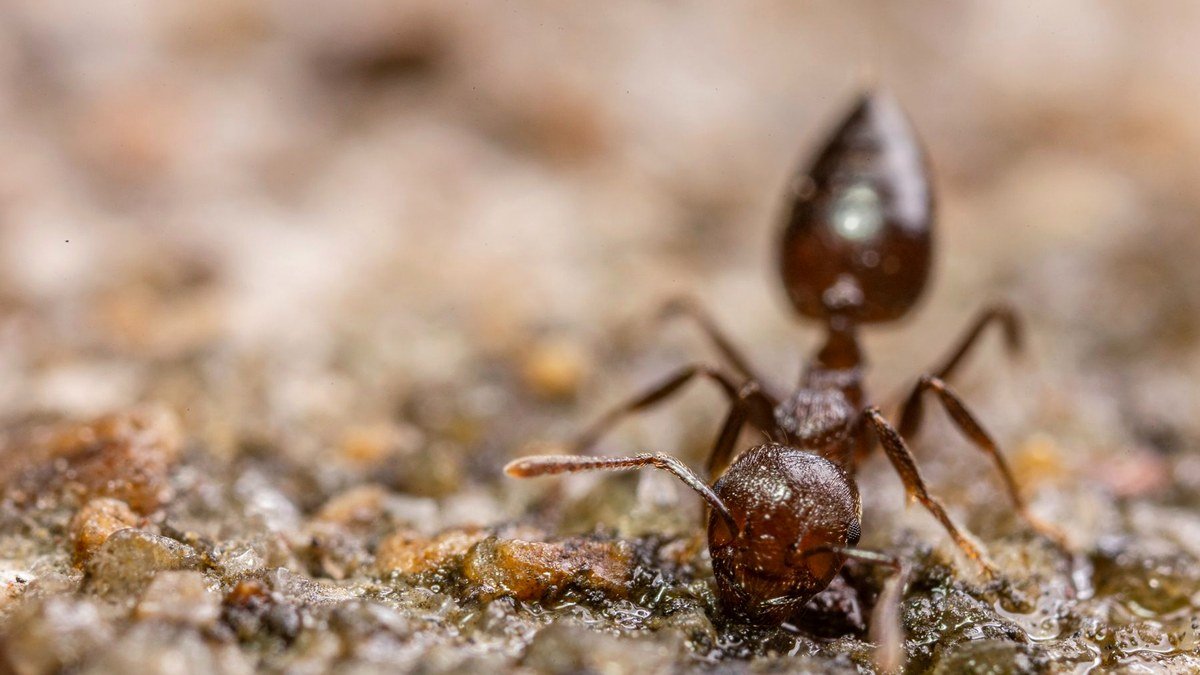
“Until, when they came upon the valley of the ants, an ant said, ‘O ants, enter your dwellings that you not be crushed by Solomon and his soldiers while they perceive not.’” (27:18)
The warning is practical: get to safety. It also includes an important qualification: “while they perceive not”. The ant doesn’t describe Sulayman as deliberately cruel. She warns of the harm an approaching army might cause without noticing.
The Qur’an doesn’t name this ant or identify the valley on a modern map. It doesn’t describe her size, rank or earlier history. Those details aren’t needed for the lesson, and we leave them out.
He smiled, then prayed
The next verse says: “So [Solomon] smiled, amused at her speech, and said…” (27:19). He doesn’t dismiss the small voice. His response turns immediately into gratitude.
The first part of the verse describes the smile. The supplication below begins with Rabbi, “My Lord”, after the words “and said”.
رَبِّ أَوْزِعْنِىٓ أَنْ أَشْكُرَ نِعْمَتَكَ ٱلَّتِىٓ أَنْعَمْتَ عَلَىَّ وَعَلَىٰ وَٰلِدَىَّ وَأَنْ أَعْمَلَ صَـٰلِحًا تَرْضَىٰهُ وَأَدْخِلْنِى بِرَحْمَتِكَ فِى عِبَادِكَ ٱلصَّـٰلِحِينَ
Transliteration: Rabbi awziʿnī an ashkura niʿmatakallatī anʿamta ʿalayya wa ʿalā wālidayya wa an aʿmala ṣāliḥan tarḍāhu wa adkhilnī biraḥmatika fī ʿibādikaṣ-ṣāliḥīn.
Translation (Sahih International): “My Lord, enable me to be grateful for Your favor which You have bestowed upon me and upon my parents and to do righteousness of which You approve. And admit me by Your mercy into [the ranks of] Your righteous servants” (27:19).
Three requests in one dua
1. Enable me to be grateful
Rabbi awziʿnī an ashkura niʿmatak: “My Lord, enable me to be grateful for Your favor.” Sulayman doesn’t merely say thank you. He asks for the ability to keep thanking. Even gratitude is something for which he needs Allah’s help.
He includes his parents: “upon me and upon my parents”. His gifts aren’t viewed in isolation. Knowledge and faith have a family history, and the dua remembers that. The Qur’an likewise tells us: “Be grateful to Me and to your parents; to Me is the [final] destination” (31:14).
2. Help me do deeds You approve
Wa an aʿmala ṣāliḥan tarḍāh: “and to do righteousness of which You approve.” Gratitude moves beyond a feeling or a sentence. It asks what to do with the gift. Sulayman doesn’t ask merely to look successful; he wants deeds that please Allah.
A related command is addressed to Dawud’s family: “Work, O family of David, in gratitude” (34:13). The connection between work and gratitude is explicit. What we do with our resources matters.
3. Admit me by Your mercy
Wa adkhilnī biraḥmatika fī ʿibādikaṣ-ṣāliḥīn: “And admit me by Your mercy into [the ranks of] Your righteous servants.” An extraordinary prophet, with an extraordinary army, asks to belong among Allah’s righteous servants. The means he names isn’t his power. It’s Allah’s mercy.
A similar dua, not an identical one
You may recognise the opening from Surah al-Ahqaf 46:15, where a person reaching maturity asks to be grateful for favours bestowed on them and their parents. The openings are similar, but the endings differ. Sulayman’s prayer in 27:19 ends by asking to be admitted among righteous servants; 46:15 includes a request for righteous offspring. When memorising, use the verse you intend rather than accidentally mixing the endings.
What the Sahih hadith say about ants
There is a separate narration in Sahih al-Bukhari 3019 and Sahih Muslim 2241 about a prophet who was bitten by an ant and ordered the colony to be burned. Allah reproached him for destroying a community that glorified Him because of one ant’s bite.
The hadith does not name that prophet. We should not label him Sulayman or turn this into a continuation of the valley story. It’s relevant here only as a separate reminder that small creatures aren’t insignificant before Allah. The Qur’anic scene and this hadith should remain distinct.
Gratitude without entitlement
Later in Surah an-Naml, when Sulayman sees the queen’s throne before him, he says: “This is from the favor of my Lord to test me whether I will be grateful or ungrateful” (27:40). A gift can be a test as well as a comfort. The question isn’t only “what have I received?” but “what kind of person am I becoming with it?”
The Prophet Muhammad ﷺ also linked worship to gratitude. When asked about his long night prayers, he said: “May I not (prove myself) to be a grateful servant (of Allah)?” (Sahih Muslim 2819; see also Sahih al-Bukhari 4836). Worship isn’t only asking for something missing. It’s also responding to what we’ve already been given.
Bringing the lesson into an ordinary day
- Name a gift honestly. Health, a useful skill, family support or a chance to learn: begin by recognising it as a favour, not an entitlement.
- Ask for help using it well. Sulayman’s dua joins gratitude to action. What would a deed Allah approves look like in your use of that gift?
- Notice what your strength might overlook. A busy household or workplace has quieter voices. The ant’s warning invites reflection on harm done without noticing.
- Remember your parents. The dua explicitly includes them. Gratitude can lead to kind treatment and prayer for them.
- Stay a servant. However much changes in your life, the final request remains: admit me by Your mercy among Your righteous servants.
These are reflections from the passage, not claims that every detail is a separate legal ruling. There is no fixed repetition count or promised material result being prescribed here.
FAQ
Where is the story of Sulayman and the ant? Surah an-Naml 27:15–19, with the ant’s warning in verse 18 and Sulayman’s dua in verse 19.
What was the ant’s name? The Qur’an doesn’t give it. We don’t present names from later tales as authenticated fact.
Did the ant accuse Sulayman of cruelty? Her warning says they might be crushed “while they perceive not” (27:18).
Can I say Sulayman’s dua myself? Yes, as a Qur’anic supplication for gratitude, good deeds and mercy. No special count or time is set here.
Related reading
- Stories of the Prophets in the Qur’an: the series index
- Shukr: gratitude and everyday practice
- Kindness to parents in the Qur’an
Qur’an translations are from Sahih International. Hadith checked on sunnah.com. Educational reflection, not a religious ruling.
Sources
- Qur’an: 27:15–19, 27:40, 31:14, 34:13, 38:30, 46:15. Arabic, translation and dua wording checked through api.quran.com on 24 Nov 2026.
- Sahih al-Bukhari 3019 and Sahih Muslim 2241: the unnamed prophet and the ant colony.
- Sahih Muslim 2819 and Sahih al-Bukhari 4836: the grateful servant.