By Dr. Malik Sherjeel Awan, PsyD · Last checked 25 November 2026
Published by Dr. Malik Sherjeel Awan, Makkah
Historic Jeddah, inscribed by UNESCO in 2014 under the title Historic Jeddah, the Gate to Makkah, is the old Red Sea port quarter many visitors now call Al-Balad. It is a place to walk, look up at timber balconies, and understand how a trading city was built. This guide stays with the official UNESCO listing, opened on 25 November 2026, and with ordinary visitor caution. It is not a religious ruling, and it does not invent opening hours or ticket prices, because those were not verified on an official visitor timetable for this article.
For another UNESCO site in the Kingdom, see our guide to Hegra in AlUla, and UNESCO’s list of World Heritage properties in Saudi Arabia.
Why the city is listed
UNESCO places Historic Jeddah on the eastern shore of the Red Sea. From the 7th century AD, the official description says, it was established as a major port for Indian Ocean trade routes, channelling goods to Makkah, and as a sea gateway for Muslim pilgrims travelling to Makkah. Those twin roles, UNESCO says, saw the city develop into a multicultural centre with a distinctive architectural tradition.
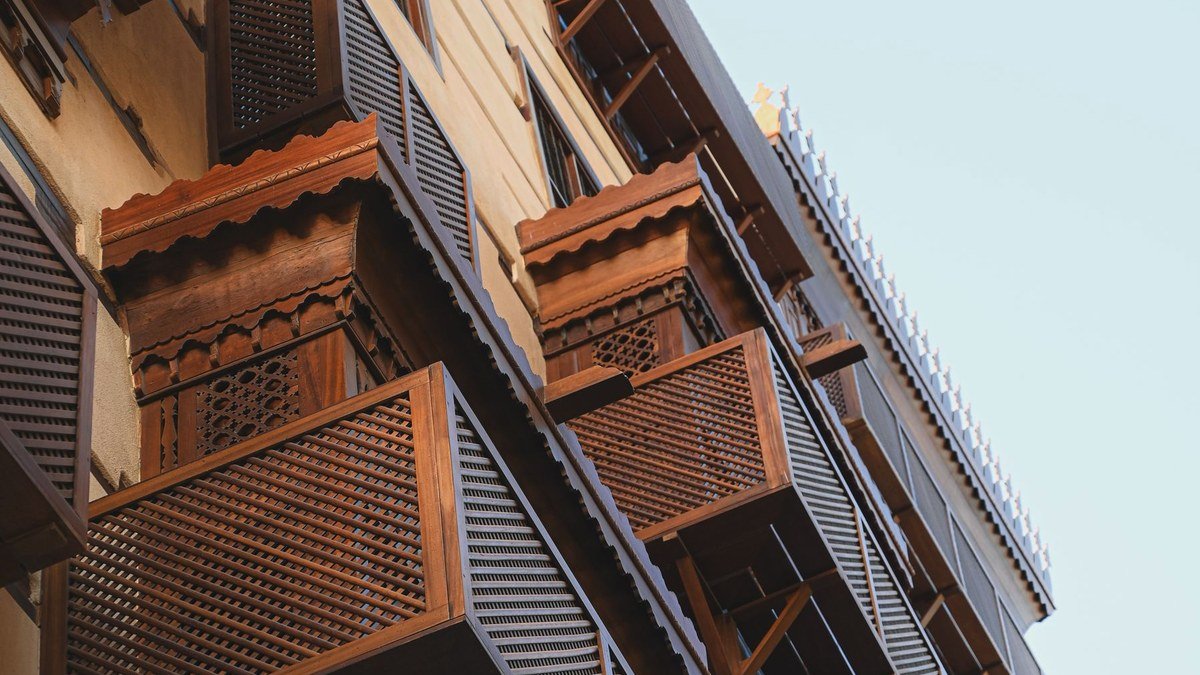
That tradition includes tower houses built in the late 19th century by the city’s mercantile elites. UNESCO describes them as combining Red Sea coastal coral building traditions with influences and crafts from along the trade routes. The historic core is a defined property of 17.92 hectares, with a buffer zone of 113.58 hectares.
When you walk the lanes, what you are looking at is this mix: coral stone, timber, height, and shade. The Roshan, the projecting carved wooden window boxes that many visitors photograph, belong to that Red Sea building language; UNESCO’s listing names the Roshan tower houses among the features that make the old city outstanding. This article will not invent a house-by-house map or a private owner’s story. Stay on public streets, and treat inhabited houses as homes, not as a set.
Walking the historic quarter
Al-Balad is a dense old town, not a fenced desert park. Practical habits help:
- go in the cooler parts of the day if you can, and carry water
- wear shoes that can handle uneven paving
- keep a meeting point if you are in a group; lanes turn quickly
- do not lean on fragile woodwork or enter a building that is not open to the public
- ask before photographing people at close range, especially at shop fronts and doorways
- buy only from a shop you can identify; keep receipts
Official visitor hours, museum tickets and any restoration closures should be read on official Visit Saudi, heritage or municipality pages on the day you go. This article does not invent them. If a street is fenced for conservation work, walk around it.
UNESCO’s own management notes, on the official listing, discuss the long-term need to slow the decay of historic houses and to manage development around the old city. For a visitor, the simple expression of that is: do not damage the buildings, and do not treat a weakened house as a climbing frame for a photograph.
Mosques and places of prayer stand in the historic fabric, as they would in any old Islamic city. If you enter one, follow the posted rules of that place. This page does not add a rite, a dress ruling, or a recommended prayer. It is a heritage walk.
Getting there and combining a trip
Jeddah is a major entry city for air travellers, including people who later take the Haramain train towards Makkah or Madinah. Historic Jeddah is a city-centre heritage quarter, not a substitute for those journeys. If you have a connecting train or a flight, leave more time than a map suggests; old-town walking is slower than a car drop-off.
This site does not rank hotels or tour companies. If you take a guided walk, ask whether the guide is operating through an official or clearly identified operator, and what the walk includes. A short official map, if one is offered at a visitor point, is more useful than an unofficial list of “secret houses.”
Other UNESCO sites in the Kingdom have their own access rules. Hegra, for example, is visited on organised tours, not by self-driving among the tombs. Al-Balad is the opposite kind of place: you walk streets that are still a living neighbourhood. Adjust your pace and your manners to that fact.
What to notice in the architecture
Without becoming a technical manual, a careful visitor can look for:
- how coral stone and timber are combined in the wall
- how upper floors project to make shade in the lane
- how doors and stair openings sit in a narrow plot
- how a late-19th-century mercantile house announces itself at the street
UNESCO’s listing is the source for the date and for the idea that these houses combine local coastal tradition with crafts that arrived on the trade routes. If a plaque or official sign on site gives a building’s name and date, treat that official sign as the caption; this article will not invent one.
FAQ
Is Historic Jeddah the same as the modern city of Jeddah?
No. UNESCO lists a defined historic property and buffer zone on the Red Sea shore. The wider city is much larger.
Do I need a tour?
Not according to any official rule verified here. A guided walk can help with context. Official notices and maps, when they are offered, should come first.
Are there official opening hours in this article?
No. Hours and tickets were not verified on an official timetable on 25 November 2026. Check official visitor pages for your date.
Why is it called the Gate to Makkah?
That is the official UNESCO title. The listing describes Jeddah’s historic role as a port for goods and for sea-borne pilgrims travelling towards Makkah.
Related reading
General visitor information only. Official UNESCO and local official visitor pages take priority. This is not a booking service and not a religious guide.
Sources
- UNESCO World Heritage Centre, Historic Jeddah, the Gate to Makkah, inscribed 2014, opened 25 November 2026: https://whc.unesco.org/en/list/1361/
- UNESCO list of World Heritage properties in Saudi Arabia, opened 25 November 2026: https://whc.unesco.org/en/statesparties/sa/