Prophets’ Stories

Stories of the prophets as told in the Qur’an and retold in classical works such as Ibn Kathir’s Qisas al-Anbiya, collected in one place.

  • Dua of Musa: Rabbi Ishrah Li Sadri (20:25-28) Word by Word

    Dua of Musa: Rabbi Ishrah Li Sadri (20:25-28) Word by Word

    By Dr. Malik Sherjeel Awan, PsyD

    Published by Dr. Malik Sherjeel Awan, Makkah

    Before a hard conversation, an interview, an exam or a first day at work, many Muslims whisper four short lines: Rabbi-shraḥ lī ṣadrī, wa yassir lī amrī, waḥlul ʿuqdatam-min lisānī, yafqahū qawlī. This is the dua of Prophet Musa (Moses), peace be upon him, from Surah Ta-Ha 20:25–28.

    It was first said at one of the most daunting moments in any prophet’s story: Musa had just been told to go to Pharaoh. Here is the dua word by word, the story behind it, and what it can teach anyone who feels nervous about the task in front of them.

    The dua in Arabic, transliteration and translation

    قَالَ رَبِّ ٱشْرَحْ لِى صَدْرِى
    وَيَسِّرْ لِىٓ أَمْرِى
    وَٱحْلُلْ عُقْدَةً مِّن لِّسَانِى
    يَفْقَهُوا۟ قَوْلِى

    Transliteration: Qāla rabbi-shraḥ lī ṣadrī. Wa yassir lī amrī. Waḥlul ʿuqdatam-min lisānī. Yafqahū qawlī.

    Translation (Sahih International): “[Moses] said, ‘My Lord, expand [i.e., relax] for me my breast [with assurance] And ease for me my task And untie the knot from my tongue That they may understand my speech’” (20:25–28).

    Word by word

    Arabic Transliteration Meaning
    رَبِّ rabbi My Lord
    ٱشْرَحْ لِى ishraḥ lī expand for me
    صَدْرِى ṣadrī my breast (my chest, my heart)
    وَيَسِّرْ لِىٓ wa yassir lī and ease for me
    أَمْرِى amrī my task, my affair
    وَٱحْلُلْ waḥlul and untie
    عُقْدَةً ʿuqdatan a knot
    مِّن لِّسَانِى min lisānī from my tongue
    يَفْقَهُوا۟ yafqahū (so that) they understand
    قَوْلِى qawlī my speech

    Notice the order. Musa asks first for an expanded heart, then for an eased task, then for a freed tongue, and finally for the result: that people understand. Inner steadiness comes before outer performance.

    The moment behind the dua

    Surah Ta-Ha describes Musa travelling with his family when he sees a fire and goes towards it (20:9–10). There Allah calls him: “Indeed, I am your Lord, so remove your sandals. Indeed, you are in the blessed valley of Ṭuwā” (20:12). After being shown signs, Musa receives his mission: “Go to Pharaoh. Indeed, he has transgressed [i.e., tyrannized]” (20:24).

    The very next verse is the dua. Musa doesn’t argue or refuse. He accepts, and immediately asks for what he’ll need.

    Why Musa asked for this

    Other passages tell us what was on Musa’s mind. In Surah ash-Shu’ara he says: “My Lord, indeed I fear that they will deny me And that my breast will tighten and my tongue will not be fluent, so send for Aaron” (26:12–13).

    In Surah al-Qasas he adds: “My Lord, indeed I killed from among them someone, and I fear they will kill me. And my brother Aaron is more fluent than me in tongue, so send him with me as support, verifying me” (28:33–34).

    So the dua answers real fears: a tightening chest, words that won’t come out, and the danger of facing a tyrant. Musa named each one honestly to Allah.

    What was the “knot” on his tongue? The Qur’an doesn’t explain it. Some commentators mention a story from Musa’s childhood in Pharaoh’s palace to explain it. That story doesn’t come from the Qur’an or from Sahih al-Bukhari or Sahih Muslim, so we don’t build on it here. What the Qur’an does make clear is that Musa felt Harun spoke more fluently (28:34).

    The rest of the dua: asking for a helper

    Musa’s prayer continues past verse 28: “And appoint for me a minister [i.e., assistant] from my family – Aaron, my brother. Increase through him my strength And let him share my task That we may exalt You much And remember You much. Indeed, You are of us ever Seeing” (20:29–35).

    Two lessons sit here. First, asking for support isn’t a lack of trust. A prophet asked for a partner. Second, look at the purpose Musa gives: “That we may exalt You much And remember You much.” He wanted help so that he could worship more, not so that he could look impressive.

    The answer came at once

    “[Allāh] said, ‘You have been granted your request, O Moses’” (20:36). Allah then reminded Musa of an earlier kindness, when He protected him as a baby and returned him to his mother (20:37–40). The message: I have looked after you before. I will look after you now.

    When Musa and Harun still felt afraid of Pharaoh’s reaction, Allah reassured them: “Fear not. Indeed, I am with you both; I hear and I see” (20:46).

    An expanded chest elsewhere in the Qur’an

    The same image of an expanded breast appears in Surah ash-Sharh, addressed to the Prophet Muhammad ﷺ: “Did We not expand for you, [O Muḥammad], your breast?” (94:1). The surah goes on: “For indeed, with hardship [will be] ease [i.e., relief]. Indeed, with hardship [will be] ease” (94:5–6). An “expanded chest” is a gift Allah gives to those who carry heavy responsibilities: the ability to hold pressure without being crushed by it.

    Lessons for anxious moments

    1. Ask for the inside first

    Before skill or eloquence, Musa asked for a calm, open heart. When we’re anxious we often focus only on performance. This dua reminds us that steadiness begins inside.

    2. Name your weak spot to Allah

    Musa didn’t pretend to be a natural speaker. He told Allah exactly where he struggled. Honesty in dua is a form of humility.

    3. Take the means

    Musa asked for Harun’s help as well as Allah’s. Preparing, practising and asking for support are part of trusting Allah, not a contradiction of it. See tawakkul (trust in Allah).

    4. Remember past kindness

    Allah answered Musa by reminding him of the river and his mother’s arms. Remembering how you were helped before is a powerful antidote to fear about what’s coming.

    5. Patience with people

    Musa went on to face years of difficulty with Pharaoh and later with his own people. The Prophet ﷺ once said, when he was hurt by a harsh remark: “May Allah bestow His Mercy on Moses, for he was harmed more (in a worse manner) than this; yet he endured patiently” (Sahih al-Bukhari 3405).

    A psychologist’s note

    Many people describe anxiety in terms that echo the feelings in these verses: a tight chest, a tongue that won’t cooperate, a fear of being misunderstood. It’s comforting to know that a prophet felt this and that the Qur’an records it without shame.

    The dua can be a steadying ritual before stressful moments. It should not be presented as a cure for an anxiety disorder. For persistent anxiety, practical tools help alongside prayer: see How to Handle Anxiety: A Psychologist’s Practical Guide, and if you get sudden waves of intense fear, what panic attack symptoms mean.

    When to say it

    • before speaking, presenting, teaching or giving advice
    • before exams, interviews or difficult meetings
    • before a hard conversation with family
    • whenever a task feels bigger than you

    The cited passage sets no repetition count or special time. We do not prescribe one, or claim that reciting it guarantees an exam result or removes a speech difficulty.

    FAQ

    Where is “Rabbi ishrah li sadri” in the Qur’an?
    Surah Ta-Ha, 20:25–28. The request continues to verse 35, and Allah’s answer is in verse 36.

    What does “Rabbi ishrah li sadri” mean?
    “My Lord, expand for me my breast”, meaning open and steady my heart so I can carry this task.

    Who did Musa ask for as a helper?
    His brother Harun (Aaron), 20:29–32, and Allah granted it (20:36).

    Can I read it for exams?
    Yes. Many Muslims do. It’s a general Qur’anic dua for ease and clear speech. Prepare well too.

    Related reading

    Qur’an translations are from Sahih International. Hadith are from Sahih al-Bukhari, checked on sunnah.com on 22 November 2026. Educational reflection only, not a religious ruling or medical advice.

    Sources

    • Qur’an (Sahih International via quran.com; Arabic, word-by-word and translation checked through api.quran.com on 22 Nov 2026): 20:9–14, 20:24–40, 20:46, 26:12–13, 28:33–34, 94:1, 94:5–6
    • Sahih al-Bukhari 3405 (Musa was harmed more than this and was patient) sunnah.com/bukhari:3405

  • Prophet Ayyub: Story, Lessons and Dua

    Prophet Ayyub: Story, Lessons and Dua

    By Dr. Malik Sherjeel Awan, PsyD

    Published by Dr. Malik Sherjeel Awan, Makkah

    When people want one word for Prophet Ayyub (Job), peace be upon him, they usually say patience. The Qur’an agrees, but it gives that patience a very particular shape. Ayyub doesn’t pretend he isn’t hurting. He names his pain to Allah, and in the same breath he names Allah’s mercy. Allah then says of him: “Indeed, We found him patient, an excellent servant. Indeed, he was one repeatedly turning back [to Allāh]” (38:44).

    This article stays close to what the Qur’an and the two Sahih collections actually say about him. It also explains why many of the details you may have heard aren’t included.

    Where Ayyub appears in the Qur’an

    Ayyub is named in four places. Two are lists of prophets who received revelation and guidance (4:163 and 6:84). His story itself is told in two short passages:

    • Surah al-Anbiya 21:83–84: his call to Allah and Allah’s response.
    • Surah Sad 38:41–44: his call, the spring of water, his family restored, and his oath.

    That is the whole Qur’anic account: around six verses. It’s short, but every phrase carries weight.

    The call: “Adversity has touched me”

    Surah al-Anbiya tells it like this: “And [mention] Job, when he called to his Lord, ‘Indeed, adversity has touched me, and You are the most merciful of the merciful’” (21:83).

    وَأَيُّوبَ إِذْ نَادَىٰ رَبَّهُۥٓ أَنِّى مَسَّنِىَ ٱلضُّرُّ وَأَنتَ أَرْحَمُ ٱلرَّٰحِمِينَ

    Transliteration: Wa ayyūba idh nādā rabbahū annī massaniyaḍ-ḍurru wa anta arḥamur-rāḥimīn.

    The dua itself: Annī massaniyaḍ-ḍurru wa anta arḥamur-rāḥimīn: “Indeed, adversity has touched me, and You are the most merciful of the merciful.”

    Look at what this dua doesn’t do. It doesn’t list demands. It doesn’t accuse. It doesn’t even directly ask for relief. It states two facts side by side: my condition and Your mercy. It’s the honesty of someone who knows the One he is speaking to, and trusts Him to understand what’s being asked.

    The word for adversity here, ad-durr, is broad. The Qur’an doesn’t specify exactly what Ayyub suffered, and we won’t fill that gap with guesswork.

    The second telling: “Satan has touched me with hardship and torment”

    In Surah Sad, his words are different: “And remember Our servant Job, when he called to his Lord, ‘Indeed, Satan has touched me with hardship and torment’” (38:41).

    We retain the verse’s own description rather than diagnosing Ayyub’s condition or building an explanation from later stories.

    The response: a spring, a family, a mercy

    Allah answered him: “So We responded to him and removed what afflicted him of adversity. And We gave him [back] his family and the like thereof with them as mercy from Us and a reminder for the worshippers [of Allāh]” (21:84).

    Surah Sad adds a concrete detail: “[So he was told], ‘Strike [the ground] with your foot; this is a [spring for a] cool bath and drink’” (38:42). Then: “And We granted him his family and a like [number] with them as mercy from Us and a reminder for those of understanding” (38:43).

    Both passages describe what was given as “mercy from Us” and “a reminder”. Relief came through an action Ayyub was told to take: strike the ground. This was a particular instruction to him, not a treatment prescribed to readers.

    The oath and the handful of grass

    The last verse contains a detail people often ask about: “[We said], ‘And take in your hand a bunch [of grass] and strike with it and do not break your oath’” (38:44).

    The verse records an instruction about keeping an oath. The Qur’an doesn’t say what the oath was or who it concerned. Stories that name the person and the reason come from later reports that aren’t in the Qur’an or in Sahih al-Bukhari or Sahih Muslim. We don’t repeat them here. The verse immediately praises him: “Indeed, We found him patient, an excellent servant.”

    What the Sahih hadith add

    Sahih al-Bukhari records a narration about Ayyub. The Prophet ﷺ said that while Ayyub was bathing, “a swarm of gold locusts fell on him and he started collecting them in his garment. His Lord called him, ‘O Job! Have I not made you rich enough to need what you see?’ He said, ‘Yes, O Lord! But I cannot dispense with your Blessing’” (Sahih al-Bukhari 3391; also 279).

    It’s a short, tender scene. Ayyub values Allah’s blessing and still turns to Him. He doesn’t treat blessing as something he’s earned, or as something he can do without. Patience in hardship and gratitude in ease are two sides of the same servanthood.

    The Prophet ﷺ also described this pattern for every believer: “if he has an occasion to feel delight, he thanks (God), thus there is a good for him in it, and if he gets into trouble and shows resignation (and endures it patiently), there is a good for him in it” (Sahih Muslim 2999).

    A note on the details you may have heard

    Retellings sometimes specify years, a diagnosis, or a name for his wife. Such details are not given in the verses or Sahih narrations used here. We do not repeat later or unauthenticated details, including stories commonly circulated as Isra’iliyyat (Israelite tradition).

    We don’t need to fill those gaps to learn from how Ayyub spoke to his Lord.

    Lessons from Ayyub’s story

    1. Patience doesn’t mean silence about pain

    Ayyub said plainly, “adversity has touched me.” The Qur’an still calls him patient in the very next breath (38:44). Sabr isn’t pretending to feel fine. It’s refusing to let pain push you away from Allah. Compare Ya’qub’s words: “I only complain of my suffering and my grief to Allāh” (12:86).

    2. Lead with Allah’s mercy

    The dua ends with “You are the most merciful of the merciful.” When you’re hurting, remembering who you’re speaking to changes the conversation.

    3. Keep turning back

    The word awwab, “one repeatedly turning back”, describes someone who returns to Allah again and again (38:44). Patience isn’t a single moment of strength. It’s turning back many times.

    4. Hardship can carry hidden good

    The Prophet ﷺ said: “No fatigue, nor disease, nor sorrow, nor sadness, nor hurt, nor distress befalls a Muslim, even if it were the prick he receives from a thorn, but that Allah expiates some of his sins for that” (Sahih al-Bukhari 5641). This doesn’t make suffering good in itself. It means suffering isn’t wasted.

    5. The reward for patience is beyond measure

    “Indeed, the patient will be given their reward without account [i.e., limit]” (39:10).

    A psychologist’s note on long illness

    People living with long-term illness or loss may feel guilty for being sad, as if sadness proves weak faith. Ayyub’s dua gently corrects that. He named his hardship honestly, and Allah praised him. Saying “this hurts” to Allah is part of patience, not a failure of it.

    Ayyub’s story also isn’t a promise that every illness will end in this life in a particular way. It’s a promise that Allah hears, that He is the most merciful of the merciful, and that patience is never lost. Using this dua doesn’t replace medical care. Take the means, see your doctor, and pray. If low mood has lasted weeks and is affecting daily life, it’s worth reading about the difference between burnout and depression and speaking to a professional.

    How to use the dua of Ayyub

    • Say it in its Qur’anic form: Annī massaniyaḍ-ḍurru wa anta arḥamur-rāḥimīn. The verse itself begins the quoted request with annī; “Rabbi” is not part of this quoted wording.
    • Use your own words too. After the Qur’anic words, tell Allah specifically what is hard, in any language.
    • Pair it with gratitude. Remember the gold locusts: Ayyub turned to Allah in ease as well.
    • Don’t give up asking. The Prophet ﷺ said a person’s dua is answered “if he does not show impatience (by saying, ‘I invoked Allah but my request has not been granted.’)” (Sahih al-Bukhari 6340).

    FAQ

    Where is the dua of Prophet Ayyub in the Qur’an?
    Surah al-Anbiya 21:83: “Indeed, adversity has touched me, and You are the most merciful of the merciful.” A second wording is in Surah Sad 38:41.

    How long was Prophet Ayyub ill?
    The Qur’an and the Sahih hadith don’t say. We do not assign a duration from later reports.

    What did Allah give Ayyub after his trial?
    Relief from his adversity, his family “and the like thereof with them”, a spring for bathing and drinking (21:84, 38:42–43), and abundant provision, as in Sahih al-Bukhari 3391.

    Is the dua of Ayyub a guaranteed cure?
    No. It is a beautiful way to call on Allah in hardship. Answers come as Allah wills and when He wills. Keep seeking medical help.

    Related reading

    Qur’an translations are from Sahih International. Hadith are from Sahih al-Bukhari and Sahih Muslim, checked on sunnah.com. Educational reflection only, not a religious ruling or medical advice.

    Sources

    • Qur’an (Sahih International via quran.com; Arabic and translation checked through api.quran.com on 20 Nov 2026): 4:163, 6:84, 12:86, 21:83–84, 38:41–44, 39:10
    • Sahih al-Bukhari 3391 and 279 (Ayyub and the gold locusts) sunnah.com/bukhari:3391
    • Sahih al-Bukhari 5641 (hardship expiates sins) sunnah.com/bukhari:5641
    • Sahih al-Bukhari 6340 (dua answered unless one becomes impatient) sunnah.com/bukhari:6340
    • Sahih Muslim 2999 (the affair of the believer) sunnah.com/muslim:2999
  • Hajar and the Well of Zamzam

    Hajar and the Well of Zamzam

    By Dr. Malik Sherjeel Awan, PsyD

    Published by Dr. Malik Sherjeel Awan, Makkah

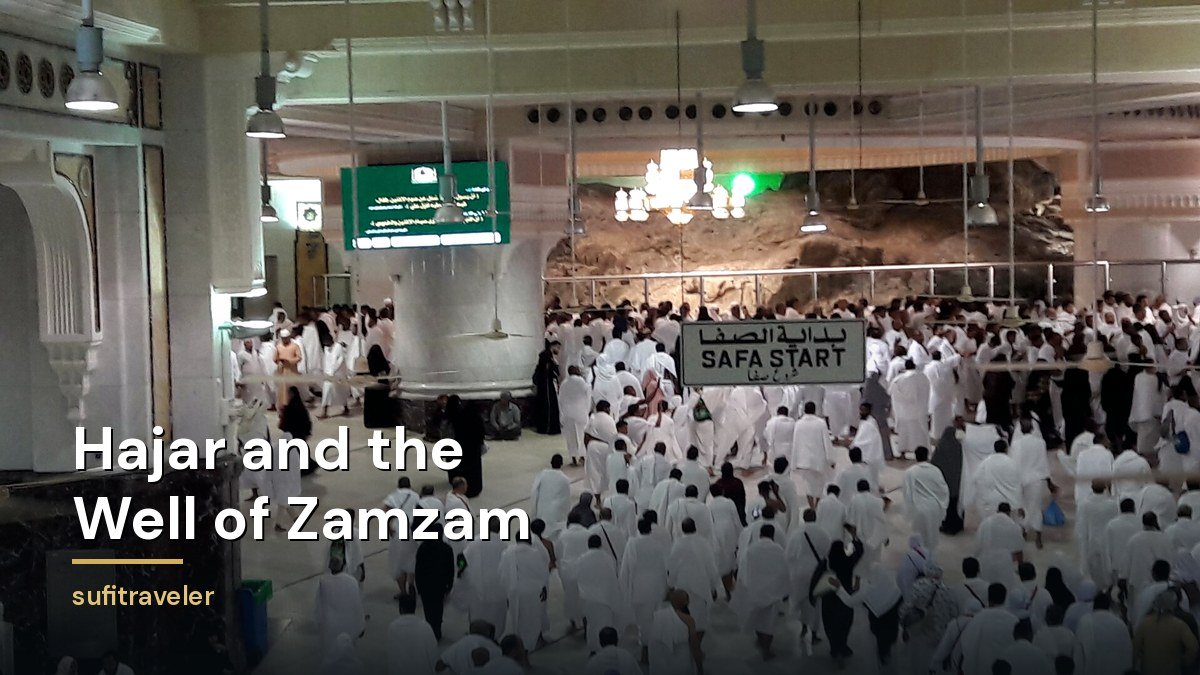
    Every pilgrim who performs Umrah or Hajj walks seven times between two small hills, Safa and Marwah. Most drink Zamzam water before or after. Both acts go back to one woman alone in a valley with her baby: Hajar, the mother of Prophet Ismail and wife of Prophet Ibrahim, peace be upon them.

    Her story is told by the Prophet ﷺ in a long narration from Ibn ‘Abbas in Sahih al-Bukhari 3364. Quotations below are from the sunnah.com English translation of that hadith unless marked otherwise.

    An empty valley

    At that time, the hadith says, “there was nobody in Mecca, nor was there any water.” Ibrahim brought Hajar and the infant Ismail to a spot near where the Kaaba would stand, under a tree at the place of Zamzam. He left them “a leather bag containing some dates, and a small water-skin containing some water,” and set off.

    Hajar followed him: “O Abraham! Where are you going, leaving us in this valley where there is no person whose company we may enjoy, nor is there anything (to enjoy)?” She asked again and again, and he didn’t look back. Then she asked a different question:

    “Has Allah ordered you to do so?” He said, “Yes.” She said, “Then He will not neglect us.”

    A father’s prayer

    Out of sight, Ibrahim turned towards the House, raised his hands and prayed. The Qur’an records his words: “Our Lord, I have settled some of my descendants in an uncultivated valley near Your sacred House, our Lord, that they may establish prayer. So make hearts among the people incline toward them and provide for them from the fruits that they might be grateful” (Qur’an 14:37).

    Running between Safa and Marwah

    Hajar nursed Ismail and drank from the water-skin until it ran out. Both became thirsty. Unable to bear watching her child in distress, she climbed Safa, the nearest hill, and looked out over the valley for anyone. She saw no one.

    She came down, and in the valley bottom “she tucked up her robe and ran in the valley like a person in distress and trouble” until she reached Marwah. She looked again and saw no one. She did this seven times.

    Then the Prophet ﷺ said:

    “This is the source of the tradition of the walking of people between them (i.e. Safa and Marwa).”

    The Qur’an confirms the place of these hills in worship: “Indeed, aṣ-Ṣafā and al-Marwah are among the symbols of Allāh” (Qur’an 2:158).

    The spring

    On her last arrival at Marwah, Hajar heard a voice. She hushed herself to listen, heard it again, and called out, “You have made me hear your voice; have you got something to help me?” She then saw an angel at the place of Zamzam, “digging the earth with his heel (or his wing), till water flowed from that place.”

    She began building a little basin around it with her hands and filling her water-skin. The Prophet ﷺ said:

    “May Allah bestow Mercy on Ishmael’s mother! Had she let the Zamzam (flow without trying to control it)… Zamzam would have been a stream flowing on the surface of the earth.”

    She drank and nursed her child. The angel reassured her: “Don’t be afraid of being neglected, for this is the House of Allah which will be built by this boy and his father, and Allah never neglects His people.”

    Notice the echo. Hajar had said, “He will not neglect us,” and the angel answered, “Allah never neglects His people.”

    A town begins

    Later, a group from the tribe of Jurhum passing nearby saw a bird circling, which told them there was water. They asked Hajar, “Do you allow us to stay with you?” She replied, “Yes, but you will have no right to possess the water,” and they agreed.

    The hadith says she “was pleased with the whole situation as she used to love to enjoy the company of the people.” Families settled, and Ismail grew up among them and learnt Arabic from them. Years later, Ibrahim and Ismail raised the foundations of the Kaaba together, as we tell in Prophet Ibrahim: Life, Trials and Legacy.

    What Zamzam is, in the sunnah

    In a separate authentic narration, the Prophet ﷺ described Zamzam: “It is blessed (water) and it also serves as food” (Sahih Muslim 2473). Pilgrims drink it with gratitude and du’a. Note that this hadith speaks of blessing and nourishment; it isn’t a medical claim, and it doesn’t replace medical advice or treatment.

    For the practical side, including where to drink it in the two Harams and the current rules for carrying it home, see Zamzam water: drinking it and taking it home. Airline and airport rules change, so check with your airline before travel.

    Lessons from Hajar

    Trust, then effort

    Hajar’s trust came first: “Then He will not neglect us.” But she didn’t sit and wait. She climbed, looked, ran and searched, seven times. In the Islamic tradition, tawakkul (trust in Allah) and effort go together. Her story is often cited as one of the clearest examples.

    Distress is not a lack of faith

    The hadith describes her running “like a person in distress and trouble.” As a psychologist, I find it meaningful that this moment is preserved honestly. A woman of great faith felt real fear for her child, and her anxious running became an act of worship for millions. Feeling afraid doesn’t mean your faith is weak. What you do with the fear matters.

    Small acts outlast us

    She probably never imagined that her search would be repeated by pilgrims for centuries. Sincere effort, even unseen, can be honoured by Allah far beyond what we expect.

    Walking in her footsteps

    When you perform sa’i, you’re retracing Hajar’s steps. Many pilgrims find it helpful to remember her story on each lap: her question, her trust, her search, and the water that came. For what to expect on the day, see Sa’i between Safa and Marwah: what to expect. Rulings on sa’i details differ between schools, so consult a scholar.

    FAQ

    Who was Hajar? The mother of Prophet Ismail and the wife of Prophet Ibrahim, peace be upon them. Her story in Makkah is narrated in Sahih al-Bukhari 3364.

    Why do pilgrims walk between Safa and Marwah seven times? The Prophet ﷺ said Hajar’s seven runs between the hills are “the source of the tradition of the walking of people between them” (Sahih al-Bukhari 3364), and the Qur’an calls the hills “symbols of Allāh” (2:158).

    How did Zamzam begin? According to Sahih al-Bukhari 3364, an angel dug the earth with his heel (or his wing) at the place of Zamzam until water flowed for Hajar and Ismail.

    Related reading

    For study and reflection. For rulings, consult a qualified scholar. For travel rules, check official sites before travel.

    Sources

    • Hadith: Sahih al-Bukhari 3364 (Ibn ‘Abbas: sunnah.com
    • Hadith: Sahih Muslim 2473 (Zamzam: sunnah.com
    • Qur’an 14:37 and 2:158 (Sahih International via quran.com; checked via api.quran.com 15 Nov 2026)

    Featured image: “Mas’aa1” by Tahir mq, via Wikimedia Commons, CC BY-SA 4.0; cropped, with title added.

  • Prophet Yusuf: The Most Beautiful of Stories

    Prophet Yusuf: The Most Beautiful of Stories

    By Dr. Malik Sherjeel Awan, PsyD

    Published by Dr. Malik Sherjeel Awan, Makkah

    Most prophets’ stories in the Qur’an are told in parts, spread across many surahs. The story of Yusuf (Joseph), peace be upon him, is different. It’s told almost entirely in one surah, from beginning to end. The surah opens: “We relate to you, [O Muhammad], the best of stories in what We have revealed to you of this Qur’an” (12:3).

    When the Prophet ﷺ was asked who was the most honourable of people, one of his answers was: “Joseph, Allah’s Prophet, the son of Allah’s Prophet, the son of Allah’s Prophet, the son of Allah’s Khalil” (Sahih al-Bukhari 3353). Yusuf, son of Ya’qub (Jacob), son of Ishaq (Isaac), son of Ibrahim (Abraham).

    Here is the story as Surah Yusuf tells it, with lessons along the way.

    1. A dream and a warning

    Young Yusuf tells his father: “O my father, indeed I have seen [in a dream] eleven stars and the sun and the moon; I saw them prostrating to me” (12:4).

    Ya’qub understands that the dream is significant, and that it could stir up envy. “O my son, do not relate your vision to your brothers or they will contrive against you a plan” (12:5).

    Lesson: not every blessing needs to be shared with everyone. A wise parent protects a child from envy without blaming anyone.

    2. Jealousy and the well

    The brothers feel their father loves Yusuf and his brother more (12:8). They take Yusuf out and throw him into a well. Even then, Allah reassures him: “You will surely inform them [someday] about this affair of theirs while they do not perceive” (12:15).

    They return with his shirt stained with “false blood”. Ya’qub answers with one of the Qur’an’s most quoted lines: “so patience is most fitting (fa sabrun jamil). And Allah is the one sought for help against that which you describe” (12:18).

    Lesson: sabr jamil, beautiful patience, is patience without bitterness or complaint to people, while turning to Allah for help. See Sufi teachings on patience.

    3. The test in the house

    Travellers find Yusuf and sell him in Egypt, where he grows up in a minister’s house. The minister’s wife tries to seduce him. She closes the doors, but Yusuf says: “[I seek] the refuge of Allah. Indeed, he is my master, who has made good my residence” (12:23).

    The Qur’an is honest about the strength of the temptation: “he would have inclined to her had he not seen the proof of his Lord” (12:24). Yusuf’s protection came from Allah, and from his awareness of Allah.

    Lesson: being tempted isn’t a sin. What matters is turning to Allah and walking away.

    4. Prison, chosen over sin

    When the pressure grows, Yusuf prays: “My Lord, prison is more to my liking than that to which they invite me” (12:33). He’s sent to prison although innocent.

    Even there, he serves. Two young men ask him to interpret their dreams (12:36), and before he answers, he speaks to them gently about Allah: “are separate lords better or Allah, the One, the Prevailing?” (12:39).

    Lesson: our circumstances don’t stop us from doing good. Yusuf turned a prison cell into a place of guidance.

    5. The king’s dream

    Years later, the king has a dream nobody can explain. Yusuf interprets it: seven years of good harvest, then seven hard years, then relief. He also gives a practical plan: store the grain “in its spikes” during the good years (12:47–49).

    His innocence is made clear first: the minister’s wife admits the truth. Then come the words: “And I do not acquit myself. Indeed, the soul is a persistent enjoiner of evil, except those upon which my Lord has mercy” (12:53). Scholars differ on whether these are Yusuf’s words or hers. Either way, they teach humility about our own souls.

    The king appoints him, and Yusuf asks: “Appoint me over the storehouses of the land. Indeed, I will be a knowing guardian” (12:55).

    Lesson: faith and competence belong together. Yusuf combined trust in Allah with careful planning.

    6. A father’s grief and hope

    Back home, Ya’qub has lost Yusuf and now another son. “His eyes became white from grief” (12:84). Yet he says: “I only complain of my suffering and my grief to Allah” (12:86), and tells his sons: “despair not of relief from Allah” (12:87).

    Lesson from a psychologist: Ya’qub grieved openly and deeply. His tears weren’t a lack of faith. He took his grief to Allah and kept hope alive. Grief and trust can live in the same heart. See fear and hope.

    7. “No blame upon you today”

    The brothers come to Egypt for grain and finally recognise him. “Are you indeed Joseph?” “I am Joseph, and this is my brother. Allah has certainly favored us. Indeed, he who fears Allah and is patient, then indeed, Allah does not allow to be lost the reward of those who do good” (12:90).

    They admit their wrong. Yusuf, who now has power over them, answers: “No blame will there be upon you today. May Allah forgive you; and He is the most merciful of the merciful” (12:92).

    Lesson: real forgiveness doesn’t wait for the other person to suffer. Yusuf forgave the moment they admitted their wrong.

    8. The dream fulfilled

    The family comes to Egypt. Yusuf raises his parents to the throne and they bow, and he says: “O my father, this is the explanation of my vision of before. My Lord has made it reality” (12:100). He doesn’t blame his brothers even now. He says Satan had “induced [estrangement] between me and my brothers”.

    He ends with a prayer: “Cause me to die a Muslim and join me with the righteous” (12:101).

    What the story teaches

    • Allah’s plan unfolds slowly. The dream came true many years later, through the well, slavery and prison.
    • Patience is active. Yusuf kept doing good in every setting.
    • Integrity protects. He chose prison over sin, and Allah raised him.
    • Forgiveness frees everyone. The family was restored because Yusuf let go.

    The surah closes: “There was certainly in their stories a lesson for those of understanding” (12:111).

    FAQ

    Why is Surah Yusuf called “the best of stories”?
    The Qur’an itself uses the phrase (12:3). It tells one complete story with clear lessons from start to finish.

    Who was Yusuf’s father?
    Prophet Ya’qub (Jacob), son of Ishaq, son of Ibrahim (Sahih al-Bukhari 3353).

    What is “sabr jamil”?
    “Beautiful patience”, Ya’qub’s words in 12:18: patience without complaint to people, with reliance on Allah.

    Related reading

    Qur’an translations are from Sahih International. Hadith are from Sahih al-Bukhari, checked on sunnah.com.

    Sources

    • Qur’an, Surah Yusuf (Sahih International via quran.com, checked 16 Nov 2026): 12:3–5, 12:8, 12:15, 12:18, 12:23–24, 12:33, 12:36, 12:39–40, 12:47–49, 12:53–56, 12:84, 12:86–87, 12:90–92, 12:100–101, 12:111
    • Hadith: Sahih al-Bukhari 3353 (Yusuf, a prophet son of a prophet son of a prophet son of Allah’s Khalil) https://sunnah.com/bukhari:3353
  • Prophet Ibrahim: Life, Trials and Legacy

    Prophet Ibrahim: Life, Trials and Legacy

    By Dr. Malik Sherjeel Awan, PsyD

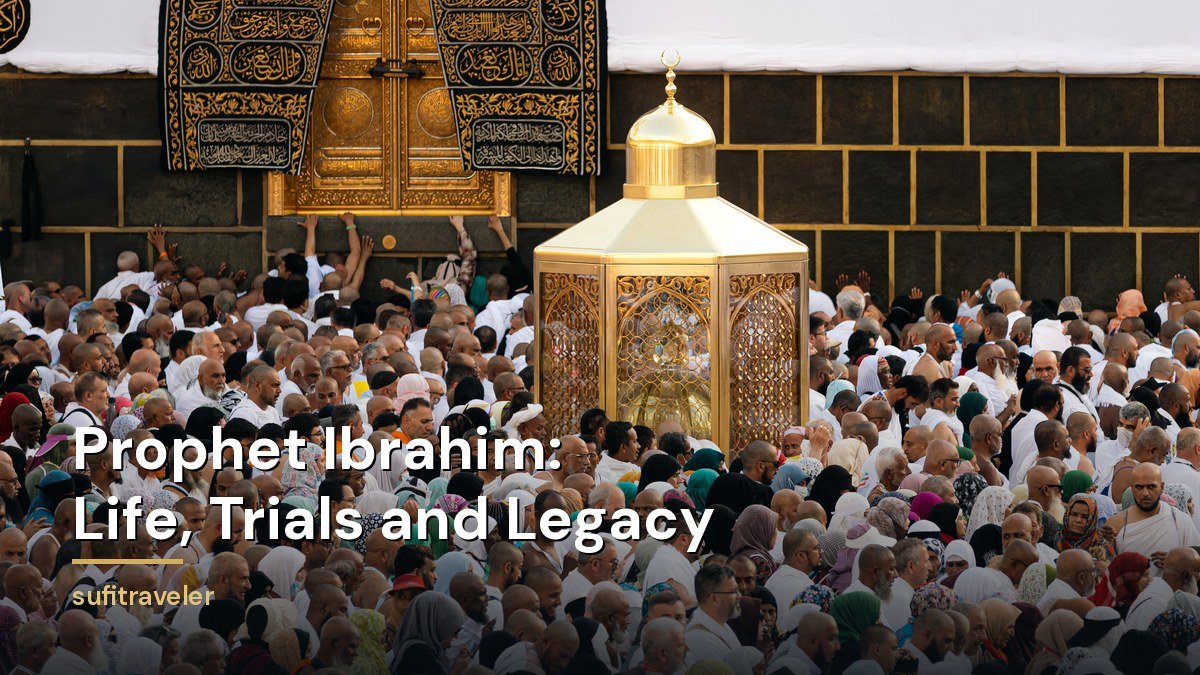
    Every year, millions of pilgrims walk in the footsteps of one man and his family. They pray near the station of Ibrahim, walk between Safa and Marwah as Hajar did, and drink from the well that sprang up for her son. Prophet Ibrahim (Abraham), peace be upon him, is at the heart of Hajj, and at the heart of what it means to trust Allah.

    The Qur’an calls him “a man of truth and a prophet” (19:41), “a [comprehensive] leader, devoutly obedient to Allah, inclining toward truth” (16:120), and says “Allah took Abraham as an intimate friend” (4:125). It holds him up as “an excellent pattern” for believers (60:4).

    This post follows his life through the Qur’an, with authentic hadith where they add detail.

    1. A young man searching for truth

    The Qur’an describes Ibrahim questioning the worship of his people. He asks his father Azar, “Do you take idols as deities? Indeed, I see you and your people to be in manifest error” (6:74).

    Then comes a well-known passage. Ibrahim looks at a star, then the moon, then the sun, and each time it sets, he turns away: “I like not those that set” (6:76). He concludes by turning his face to the Creator of the heavens and the earth (6:74–79). Many commentators read this as Ibrahim reasoning with his people, leading them step by step to see that what disappears cannot be God.

    Gentle words with his father

    Ibrahim’s disagreement with his father is firm but tender. In Surah Maryam he speaks to him with respect, calling him “O my father”, and when rejected, answers, “Peace will be upon you” (19:41–48). Even in the deepest disagreement, his manners stay good.

    2. The idols and the fire

    Ibrahim broke the idols of his people and left the largest standing, to make them think (21:51–67). We tell this part in detail in Why did Ibrahim break the idols?.

    His people decided to burn him. The Qur’an records Allah’s command: “O fire, be coolness and safety upon Abraham” (21:69).

    3. “So that my heart may be satisfied”

    One of the most human moments in his story: Ibrahim asks Allah to show him how He gives life to the dead. Allah asks, “Have you not believed?” Ibrahim replies, “Yes, but [I ask] only that my heart may be satisfied” (2:260).

    As a psychologist, I find this verse very comforting. A prophet of Allah, sure of his faith, still asked for his heart to be put at rest. Asking questions and wanting deeper certainty sit comfortably alongside faith.

    4. Hajar, Ismail and the barren valley

    Ibrahim settled his wife Hajar and their infant son Ismail in the valley of Makkah, then uncultivated, beside the Sacred House. He prayed: “Our Lord, I have settled some of my descendants in an uncultivated valley near Your sacred House… that they may establish prayer. So make hearts among the people incline toward them and provide for them from the fruits” (14:37).

    Sahih al-Bukhari 3364 records Hajar’s question, “Has Allah ordered you to do so?” When he said yes, she replied, “Then He will not neglect us.” What followed (her search between Safa and Marwah, and the spring of Zamzam) is told in our next story, Hajar and the Well of Zamzam.

    5. The great test: the sacrifice

    Ibrahim had asked Allah for a righteous child (37:100). When the boy was old enough to work alongside him, Ibrahim told him of a dream: “O my son, indeed I have seen in a dream that I [must] sacrifice you, so see what you think.” The son replied, “O my father, do as you are commanded. You will find me, if Allah wills, of the steadfast” (37:102).

    When both had submitted, Allah called to Ibrahim that he had fulfilled the vision, and “We ransomed him with a great sacrifice” (37:107). The Qur’an then gives Ibrahim the good news of Ishaq (37:112). Most scholars identify the son of the sacrifice as Ismail, partly because Ishaq’s birth is announced after the story. Some held a different view, which classical tafsir discusses.

    Muslims remember this every Eid al-Adha through the sacrifice (udhiyah). Rulings on it differ between schools, so consult a scholar.

    6. Building the Kaaba

    Years later, Ibrahim returned and, with Ismail, raised the foundations of the House: “And [mention] when Abraham was raising the foundations of the House and [with him] Ishmael, [saying], ‘Our Lord, accept [this] from us. Indeed, You are the Hearing, the Knowing’” (2:127).

    Sahih al-Bukhari 3364 adds touching detail: Ismail brought the stones while Ibrahim built, and when the walls grew high, Ismail brought a stone for his father to stand on. Both kept repeating that same prayer as they worked.

    Allah designated the site of the House for Ibrahim and commanded him to purify it for those who perform tawaf, stand, bow and prostrate (22:26).

    7. The call to Hajj

    Then came the command: “And proclaim to the people the Hajj; they will come to you on foot and on every lean camel; they will come from every distant pass” (22:27). Every pilgrim who answers that call today is answering Ibrahim’s proclamation.

    If you’re preparing for Hajj, see How to perform Hajj on our sister site, madinamakkah.com.

    8. A father’s prayers

    Ibrahim’s supplications are among the most beautiful in the Qur’an. In Surah Ibrahim he prays: “My Lord, make me an establisher of prayer, and [many] from my descendants. Our Lord, and accept my supplication” (14:40).

    The Prophet ﷺ used to seek refuge with Allah for his grandsons al-Hasan and al-Husain with words he said their forefather Ibrahim used for Ismail and Ishaq: “O Allah! I seek refuge with Your Perfect Words from every devil and from poisonous pests and from every evil, harmful, envious eye” (Sahih al-Bukhari 3371).

    9. His rank and humility

    When a man addressed the Prophet ﷺ as “O, the best of creation”, he replied, “He is Ibrahim” (Sahih Muslim 2369). That one answer shows both Ibrahim’s honour and the Prophet’s humility.

    Lessons for the inner life

    The Sufi tradition reflects often on Ibrahim as the model of tawakkul (trust) and taslim (surrender). Without going beyond what the texts say, a few lessons stand out:

    • Trust doesn’t mean no effort. Hajar ran between the hills, and Ibrahim built with his own hands.
    • Questions and faith can live together (2:260).
    • Firmness and gentleness can go together, as in how he spoke to his father.
    • Every act can be offered: “Our Lord, accept [this] from us” (2:127).

    FAQ

    Why is Ibrahim called Khalil Allah? Because the Qur’an says “Allah took Abraham as an intimate friend” (4:125).

    Which son was to be sacrificed? The Qur’an doesn’t name him in 37:100–107. Most scholars hold it was Ismail, noting that Ishaq’s birth is announced afterwards (37:112). Consult a mainstream tafsir for the discussion.

    How is Ibrahim connected to Hajj? He and Ismail built the Kaaba (2:127), he was told to proclaim the Hajj (22:27), and Hajar’s search between Safa and Marwah is the origin of the sa’i (Sahih al-Bukhari 3364).

    Related reading

    For study and reflection. For rulings or detailed interpretation, consult a qualified scholar and a mainstream tafsir.

    Sources

    • Qur’an (Sahih International via quran.com; verses checked via api.quran.com 15 Nov 2026): 2:124, 2:127–129, 2:260, 4:125, 6:74–79, 14:35–41 (14:37, 14:40), 16:120, 19:41–48, 21:51–70 (21:69), 22:26–27, 37:83–113 (37:100–107, 37:112), 60:4
    • Hadith: Sahih al-Bukhari 3364 (Hajar, Zamzam, Ibrahim and Ismail building the Kaaba): sunnah.com
    • Hadith: Sahih al-Bukhari 3371 (Ibrahim seeking refuge for Ismail and Ishaq): sunnah.com
    • Hadith: Sahih Muslim 2369 (‘O best of creation’ – ‘That is Ibrahim’): sunnah.com

    Featured image: “Pilgrims begin this year’s Hajj rituals with a circumambulation of the Kaaba (2025)” by Saudi Press Agency (SPA), via Wikimedia Commons, CC BY-SA 4.0; cropped, with title added.

  • The Sacrifice of Ismail: What the Qur’an Says

    The Sacrifice of Ismail: What the Qur’an Says

    By Dr. Malik Sherjeel Awan, PsyD

    Published by Dr. Malik Sherjeel Awan, Makkah

    Every Eid al-Adha, Muslims around the world remember a father and a son on a hillside, and a test the Qur’an itself calls “the clear trial” (37:106). The story is short in the Qur’an, just a few verses in Surah as-Saffat, but each line carries great weight.

    This post follows those verses closely, with the Sahih International translation, and reflects on what they teach about trust, surrender and mercy.

    The prayer for a child

    The story begins with Ibrahim (Abraham), peace be upon him, leaving his people after they rejected his message. He says: “Indeed, I will go to [where I am ordered by] my Lord; He will guide me” (37:99).

    Then he makes a simple, heartfelt prayer: “My Lord, grant me [a child] from among the righteous” (37:100).

    Allah answers: “So We gave him good tidings of a forbearing boy” (37:101). The word the Qur’an uses, halim, means forbearing or gentle and patient. That’s a description of the son’s character before the test even begins.

    The dream

    “And when he reached with him [the age of] exertion, he said, ‘O my son, indeed I have seen in a dream that I [must] sacrifice you, so see what you think’” (37:102).

    Notice three things:

    1. The timing. The verse says the boy had reached “[the age of] exertion”, which commentators understand as old enough to walk and work alongside his father. This wasn’t a stranger or a newborn. It was a son Ibrahim had waited for and come to know.
    2. The dream. The early scholar ‘Ubaid bin ‘Umair, one of the Successors, said, “The dreams of the Prophets are Divine Inspirations,” and recited this verse. His statement is recorded in Sahih al-Bukhari 859; it is his own saying, not a hadith of the Prophet ﷺ. Ibrahim understood the dream as a command.
    3. The question. Ibrahim doesn’t simply act. He tells his son and asks, “so see what you think.” Even in the hardest command, he treats his son with respect and includes him.

    The son’s answer

    The son replies: “O my father, do as you are commanded. You will find me, if Allah wills, of the steadfast” (37:102).

    The forbearing boy lives up to his description. He doesn’t rely on his own strength. He says in sha’ Allah, “if Allah wills”, and calls himself one of the patient. His courage rests on Allah, not on himself.

    The moment of surrender

    “And when they had both submitted and he put him down upon his forehead” (37:103).

    The Arabic word for “they had both submitted”, aslama, shares its root with Islam. Here, at the centre of the story, the meaning of the religion is shown in action. Father and son both hand the matter entirely to Allah.

    The call and the ransom

    At that moment, Allah calls: “O Abraham, You have fulfilled the vision. Indeed, We thus reward the doers of good” (37:104–105).

    “Indeed, this was the clear trial. And We ransomed him with a great sacrifice” (37:106–107).

    The test was never about Allah needing a sacrifice. It was about Ibrahim’s willingness. Once that was shown, Allah ransomed the son with “a great sacrifice”. The verses end with honour for Ibrahim: “And We left for him [favorable mention] among later generations: ‘Peace upon Abraham.’ Indeed, We thus reward the doers of good. Indeed, he was of Our believing servants” (37:108–111).

    Which son?

    The verses don’t name the son. Right after the story, the Qur’an says: “And We gave him good tidings of Isaac, a prophet from among the righteous” (37:112). Because the glad tidings of Ishaq (Isaac) come after the sacrifice story, many Muslim scholars, including most later scholars, understand the son in the story to be Ismail, Ibrahim’s elder son. Some early scholars held a different view. The lesson of the story is the same either way.

    What the story teaches

    Trust that comes before understanding

    Ibrahim didn’t know how the test would end. He acted on Allah’s command and trusted that Allah is good. That is tawakkul, trust in Allah. See tawakkul: trust in Allah.

    Surrender is shared

    The story isn’t only about a father’s obedience. The son’s willing answer matters just as much. Faith can be passed on through example, conversation and respect, as Ibrahim showed by asking his son.

    Allah’s mercy is part of the test

    The test ended with ransom and honour, not loss. “Indeed, Ibrahim was tried by his Lord with words [i.e., commands] and he fulfilled them” (2:124), and Allah made him a leader for people.

    A note from a psychologist

    People sometimes ask me how a story like this can sit with a loving view of God. I think the verses answer it themselves. The test was about Ibrahim’s heart. The son was never harmed. And the story shows that real surrender often happens together with fear and love, not instead of them. Ibrahim loved his son, and he loved Allah more. Most of our tests are far smaller, but the pattern holds: we bring our attachments to Allah, and we find He is more merciful than we feared.

    The story in Eid al-Adha

    The sacrifice on Eid al-Adha remembers this moment. The Prophet ﷺ himself sacrificed two rams with his own hands, saying Allah’s name and the takbir (Sahih al-Bukhari 5558; Sahih Muslim 1966).

    The Qur’an makes the meaning clear: “Their meat will not reach Allah, nor will their blood, but what reaches Him is piety from you” (22:37). The animal is the outward act. The inward act is the same as Ibrahim’s: giving something we value for Allah’s sake.

    For pilgrims, Hajj brings the whole family of Ibrahim to life, from Hajar’s search for water to the Kaaba he raised with his son. See the madinamakkah.com guide to how to perform Hajj for the rites.

    Reflection questions

    • What is the “son” in my own life, the thing I find hardest to hand to Allah?
    • When I face a hard decision, do I include the people it affects, as Ibrahim did?
    • Do I rely on my own strength, or say in sha’ Allah and mean it?

    FAQ

    Where is the story in the Qur’an?
    Surah as-Saffat (37), verses 99–113.

    Does the Qur’an say Ibrahim was told to sacrifice Ismail by name?
    No. The son isn’t named in the verses. Many scholars identify him as Ismail because of 37:112.

    Why do Muslims sacrifice an animal on Eid al-Adha?
    To remember Ibrahim’s surrender and follow the Prophet’s ﷺ practice. The Qur’an says what reaches Allah is the piety behind it (22:37).

    Related reading

    Qur’an translations are from Sahih International. Hadith are from Sahih al-Bukhari and Sahih Muslim, checked on sunnah.com.

    Sources

    Featured image: Uruq Bani Ma'arid Reserve, Saudi Arabia, by Saudi Press Agency (SPA), via Wikimedia Commons, CC BY-SA 4.0; cropped, with title added.

  • The People of Nuh and the Flood: How the Qur’an Tells the Story

    The People of Nuh and the Flood: How the Qur’an Tells the Story

    For nine hundred and fifty years Nuh, peace be upon him, called his people, and most of them mocked him. The sky opened, the earth burst with springs, and a small ship carried a few believers through “waves like mountains”.

    This is day six of our Qur’an Stories series. The previous story covered Nuh’s call and the building of the Ark. This one follows the Flood itself, using the verses on Quran.com and the explanation of Ibn Kathir. It is a reflection on meaning, not a ruling.

    Quick answer

    Short answer: When God’s command came, Nuh was told to load “of each [creature] two mates and your family” and the believers, who were “a few” (11:40). His son refused to board and was drowned (11:42-43). Then the earth swallowed its water and the ship “came to rest on the [mountain of] Judiyy” (11:44). The Qur’an calls it “a sign for the worlds” (29:15).

    Where the story appears

    Where the Flood appears in the Qur’an

    • Surah Hud: the boarding, the son, al-Judi and Nuh’s plea for his son (11:40-48).
    • Surah al-Qamar: the gates of heaven, the springs and the ship of “planks and nails” (54:9-17).
    • Surah Nuh: Nuh’s final prayer against the deniers (71:25-28).
    • Surah ash-Shu’ara: “judge between me and them” and “the laden ship” (26:117-120).
    • Surah al-‘Ankabut: “a sign for the worlds” (29:14-15).

    “I am overpowered, so help”

    By the end, the people of Nuh had called him “a madman” and driven him back (54:9).

    So Nuh turned to his Lord with one of the shortest prayers in the Qur’an: “Indeed, I am overpowered, so help” (54:10). Ibn Kathir explains it as: I am weak and cannot resist my people, so help Your religion.

    The gates of heaven open

    The answer came in a single image. “Then We opened the gates of the heaven with rain pouring down, and caused the earth to burst with springs, and the waters met for a matter already predestined” (54:11-12).

    Surah Hud adds a sign: “the oven overflowed” (11:40). Ibn Kathir reports from Ibn ‘Abbas that the tannur here means the face of the earth. Water gushed from every place, even the places where fire was normally lit.

    Who boarded the Ark

    Nuh was told: “Load upon it of each [creature] two mates and your family, except those about whom the word has preceded, and [include] whoever has believed.” Then the verse adds, simply: “But none had believed with him, except a few” (11:40).

    As they boarded, Nuh said: “Embark therein; in the name of Allah [are] its course and its anchorage” (11:41). Surah al-Qamar calls the ship “a [construction of] planks and nails”, sailing “under Our observation” (54:13-14).

    The son who stayed behind

    The most painful moment of the story is a conversation between a father and his son. “It sailed with them through waves like mountains, and Noah called to his son who was apart [from them], ‘O my son, come aboard with us and be not with the disbelievers’” (11:42).

    The son answered: “I will take refuge on a mountain to protect me from the water.” Nuh replied: “There is no protector today from the decree of Allah, except for whom He gives mercy.” Then “the waves came between them, and he was among the drowned” (11:43).

    Ibn Kathir notes that the “family” excepted in 11:40 were those of Nuh’s household who did not believe, among them this son and Nuh’s wife. The Qur’an itself names the wife of Nuh as an example of those who disbelieved (66:10).

    The water subsides and the ship rests

    Then came the end of the Flood. “O earth, swallow your water, and O sky, withhold [your rain].” The water subsided, “the matter was accomplished”, and the ship “came to rest on the [mountain of] Judiyy. And it was said, ‘Away with the wrongdoing people’” (11:44).

    Ibn Kathir passes on a saying from Mujahid that al-Judi is a mountain in al-Jazirah, the upper Mesopotamia region. The Qur’an names the mountain but does not say where it is.

    “He is not of your family”

    After the Flood, Nuh spoke to his Lord about his son. “My Lord, indeed my son is of my family; and indeed, Your promise is true; and You are the most just of judges” (11:45).

    The answer was firm and gentle at once: “O Noah, indeed he is not of your family; indeed, he is [one whose] work was other than righteous, so ask Me not for that about which you have no knowledge” (11:46).

    Ibn Kathir explains that the promise was to save those of Nuh’s family who believed. He reports from Ibn ‘Abbas that the boy was truly Nuh’s son, but opposed him in deeds and intention. Nuh at once sought refuge and forgiveness (11:47), and was told to “disembark in security” (11:48).

    Close by bloodClose by faith
    WhoNuh’s son and wifeThe few who believed
    What they didRefused the callBoarded with Nuh
    Outcome in the versesAmong the drowned (11:43)Saved in the ship (26:119)
    Two kinds of closeness in the story

    Nuh’s final prayer

    Surah Nuh records his prayer as the story closed. The deniers “were drowned and put into the Fire, and they found not for themselves besides Allah [any] helpers” (71:25).

    Nuh asked that none of the deniers be left on the earth, “if You leave them, they will mislead Your servants” (71:26-27). Ibn Kathir says Nuh said this from what he knew of them after nine and a half centuries. He closed with a prayer of forgiveness for “the believing men and believing women” (71:28).

    Warning

    A note on disputed reports. Ibn Kathir passes on a report from Ibn ‘Abbas that about eighty people were on board, and names the son as Yam. Some reports mention which birds and animals boarded first and last, and some say the Ark stayed visible on al-Judi for early generations. The Qur’an says only “a few” and gives no names or numbers. Scholars also differ on how far the Flood reached. These details are reports, some from earlier scriptures (Isra’iliyyat), and we mention them only as reports, not as fact.

    Lessons for the heart

    • Mockery doesn’t delay God’s decree. The chiefs laughed at a ship on dry land until the water came.
    • Kinship can’t save the one who refuses. Even a prophet’s son was “among the drowned”.
    • Turn to God in weakness. “I am overpowered, so help” is a prayer anyone can make.

    What comes next

    The series moves on to the nations that came after Nuh. Until then, browse the Qur’an Stories series.

    Sources

    Verse wording: Saheeh International, ranges linked above, each opened 28 Oct 2026: 11:36-48, 54:9-17, 71:21-27 (with 71:28), 26:116-120, 29:14-15 and 66:10. Tafsir: Ibn Kathir on 11:40, 11:44, 11:45, 54:11 and 71:26.

  • Prophet Nuh and the Ark: 950 Years of Calling His People to God

    Prophet Nuh and the Ark: 950 Years of Calling His People to God

    Nuh, peace be upon him, called his people to worship God alone for nearly a thousand years. He spoke to them in public and in private, by night and by day. Most of them turned away. Then God told him to build a ship on dry land, and the mockery only grew louder.

    This is day five of our Qur’an Stories series. We follow the verses on Quran.com and the explanation of Ibn Kathir. This post covers Nuh’s call and the building of the Ark. The Flood itself is the next story in the series. This is a reflection on meaning, not a ruling.

    Quick answer

    Short answer: The Qur’an says Nuh “remained among them a thousand years minus fifty years” (29:14), calling his people “night and day” (71:5). Their leaders called him “a man like ourselves” and mocked his followers (11:27). God then revealed that no more of them would believe, and told him: “construct the ship under Our observation and Our inspiration” (11:37).

    Where the story appears

    Key passages

    • Surah Nuh: his whole method of calling, in his own words (71:1-12) and his complaint to God (71:21-24).
    • Surah Hud: the argument with the leaders (11:25-28, 11:32-34) and the building of the Ark (11:36-39).
    • Surah ash-Shu’ara: “I do not ask you for it any payment” (26:105-118).
    • Surah al-Mu’minun: “if Allah had willed… He would have sent down angels” (23:23-24).
    • Length of his mission: “a thousand years minus fifty years” (29:14).

    The call: night and day, open and secret

    Surah Nuh opens with God sending Nuh to “warn your people before there comes to them a painful punishment” (71:1). His message was simple: “worship Allah, fear Him and obey me”, with a promise attached: “He will forgive you of your sins” (71:3-4).

    Then Nuh tells God, in his own words, how he went about it. “My Lord, indeed I invited my people night and day. But my invitation increased them not except in flight” (71:5-6). Every time he called them, “they put their fingers in their ears, covered themselves with their garments, persisted, and were arrogant” (71:7). So he changed his approach. “Then I invited them publicly. Then I announced to them and also confided to them secretly” (71:8-9).

    He even spoke to their worldly hopes: ask forgiveness, and God would “send rain from the sky upon you” and “give you increase in wealth and children” (71:10-12).

    Ibn Kathir explains that Nuh “presented the clear call… and the comprehensive invitation in various ways”, sometimes by encouragement and sometimes by warning. Nuh adapted his method; he never changed his message.

    The leaders’ objections

    The Qur’an gives the chiefs’ arguments in their own words, and they still sound familiar. “We do not see you but as a man like ourselves,” they said, “and we do not see you followed except by those who are the lowest of us” (11:27). Elsewhere: “if Allah had willed to send a messenger, He would have sent down angels. We have not heard of this among our forefathers” (23:24).

    Nuh’s answer was gentle and firm. He would not drive away the poor believers: “I am not one to drive away the believers. I am only a clear warner” (26:114-115). He asked them for nothing: “I do not ask you for it any payment. My payment is only from the Lord of the worlds” (26:109). He would not force faith on anyone: “should we force it upon you while you are averse to it?” (11:28).

    In the end the leaders dared him: “bring us what you threaten us, if you should be of the truthful” (11:32). They threatened him too: “If you do not desist, O Noah, you will surely be of those who are stoned” (26:116).

    The idols of Nuh’s people

    Nuh’s complaint names the idols his people refused to leave: “Never leave Wadd or Suwa’ or Yaghuth and Ya’uq and Nasr” (71:23). Ibn Kathir cites a report in Sahih al-Bukhari from Ibn ‘Abbas (Bukhari 4920): these “were all named after righteous men from the people of Nuh”. After those men died, people made images to remember them, and later generations came to worship them.

    The worship of idols began not with hatred of good people but with exaggerated love for them.

    950 years

    Surah al-‘Ankabut says Nuh “remained among them a thousand years minus fifty years” (29:14). Ibn Kathir explains that God told this to the Prophet Muhammad, peace be upon him, as consolation. If Nuh kept calling for so long with so few responding, a caller today shouldn’t despair at slow results.

    Ibn Kathir also reports a view from Ibn ‘Abbas that Nuh was sent at forty and lived some years after the Flood. Scholars report different figures for his total age. The Qur’an’s own figure is the time he spent among his people, and that is the one we rely on here.

    “Construct the ship”

    At last the waiting ended. God revealed: “No one will believe from your people except those who have already believed, so do not be distressed by what they have been doing. And construct the ship under Our observation and Our inspiration” (11:36-37). Ibn Kathir explains “under Our eyes” as “under Our vision”, and “Our revelation” as “We will teach you what to do”.

    So Nuh built a ship far from any sea. “Whenever an assembly of the eminent of his people passed by him, they ridiculed him.” He replied: “If you ridicule us, then we will ridicule you just as you ridicule. And you are going to know who will get a punishment that will disgrace him” (11:38-39).

    Warning

    A note on reports. Ibn Kathir passes on a report from Muhammad ibn Ishaq, “from the Tawrah”, giving the Ark’s wood, its measurements in cubits and three decks. Reports like this come from earlier scriptures (Isra’iliyyat). Scholars treat them as neither confirmed nor denied, and the Qur’an gives no measurements. We mention it only as a report, not as fact.

    Lessons for the heart

    • Keep calling, change the method. Nuh tried public and private, hope and warning.
    • Don’t measure truth by who follows it. The chiefs mocked the believers for being poor, and Nuh refused to turn them away.
    • Sincerity asks for nothing. “My payment is only from the Lord of the worlds.”

    What comes next

    The next story in the series turns to the Flood itself: the boarding, Nuh’s son, and the ship coming to rest. Until then, browse the full Qur’an Stories series, or go back to the first story, Iblis and Adam.

    Sources

    Verse wording: Saheeh International, ranges linked above, checked 25 Oct 2026. Tafsir: Ibn Kathir on 11:37, 29:14 and 71:23. Hadith: Sahih al-Bukhari 4920.

  • Prophet Idris in the Qur’an: Utterly Truthful, Patient and Lifted to a Lofty Place

    Prophet Idris in the Qur’an: Utterly Truthful, Patient and Lifted to a Lofty Place

    Some prophets fill whole surahs. Idris appears in just four verses. The Qur’an tells us no events from his life, no dialogue and no people he was sent to. What it gives instead is a short portrait of character: truthful, patient, righteous, and honoured by God.

    This is day four of our Qur’an Stories series. We read the verses in Arabic on Quran.com, give their meaning in plain English, and follow the explanation of Ibn Kathir. This is a reflection on meaning, not a ruling.

    Quick answer

    Short answer: The Qur’an says of Idris that “he was utterly truthful, a prophet. And We lifted him to a lofty place” (19:56-57). It also names him with Isma’il and Dhu’l-Kifl: “each of them was among those who endure with patience… they were truly among the righteous” (21:85-86). Scholars differ on what “a lofty place” means; Ibn Kathir reports views including the fourth heaven and Paradise.

    Where Idris appears in the Qur’an

    Key takeaways

    • Passages: 19:56-57 in Surah Maryam and 21:85-86 in Surah al-Anbiya.
    • Described as: “utterly truthful, a prophet.”
    • Listed among: “those who endure with patience” and “the righteous.”
    • Honour: “We lifted him to a lofty place.”

    The Qur’an does not tell us when he lived, where, or to whom he was sent. In keeping with this series, we do not fill those gaps.

    “Utterly truthful, a prophet”

    Surah Maryam brings a run of prophets before the reader, each with a command to remember. For Idris it says (19:56):

    وَٱذْكُرْ فِى ٱلْكِتَـٰبِ إِدْرِيسَ ۚ إِنَّهُۥ كَانَ صِدِّيقًا نَّبِيًّا

    Meaning: Recall in the Scripture Idris: he was utterly truthful, a prophet.

    The Arabic word is siddiq, from sidq, truthfulness. It describes someone whose truth runs through speech, intention and action. Ibn Kathir notes that Allah praised Idris as truthful and a prophet, and told of raising him to a high place (Tafsir Ibn Kathir, 19:56).

    “We lifted him to a lofty place”

    The next verse is just as short (19:57):

    وَرَفَعْنَـٰهُ مَكَانًا عَلِيًّا

    Meaning: And We lifted him to a lofty place.

    The verse itself does not explain what the lifting was.

    ViewReported fromNote
    The fourth heavenMujahid, via Ibn KathirLinked to the Night Journey hadith below
    ParadiseAl-Hasan and others, via Ibn KathirAlso reported in Ibn Kathir’s tafsir
    How the commentators read 19:57

    Both views are recorded by Ibn Kathir. We present them side by side, as he does, without choosing between them.

    The Night Journey hadith

    In the hadith of the Isra and Mi’raj, in the fourth heaven the Prophet ﷺ greeted Idris, who said: “Welcome, brother and prophet.” (Sahih al-Bukhari 3207, graded sahih). A narration in Sahih Muslim 162a, also sahih, mentions Idris in the fourth heaven and then quotes 19:57.

    “Among those who endure with patience”

    Surah al-Anbiya mentions Idris again, this time in a group (21:85-86):

    وَإِسْمَـٰعِيلَ وَإِدْرِيسَ وَذَا ٱلْكِفْلِ ۖ كُلٌّ مِّنَ ٱلصَّـٰبِرِينَ

    Meaning: And Isma’il, Idris and Dhu’l-Kifl: each of them was among those who endure with patience.

    وَأَدْخَلْنَـٰهُمْ فِى رَحْمَتِنَآ ۖ إِنَّهُم مِّنَ ٱلصَّـٰلِحِينَ

    Meaning: We brought them into Our mercy; they were truly among the righteous.

    The order is worth noticing. Enduring with patience comes first, then being brought into God’s mercy, then the description of righteousness. The verses do not say what each one was patient through.

    What we leave out

    Many older books add details about Idris: that he was the biblical Enoch, the first to write with a pen or sew clothes, or stories of how he was taken up. Some English translations even render his name in these verses as “Enoch”; the Arabic says Idris, and the link is not established. These details come largely from Isra’iliyyat (reports from earlier traditions) and cannot be confirmed from the Qur’an or sahih hadith. This series does not present them as fact.

    Truthfulness and patience together

    Read together, the two passages give us a small but complete picture. In Surah Maryam, Idris is utterly truthful. In Surah al-Anbiya, he is among those who endure with patience. Truth without patience can turn harsh, and patience without truth can become mere silence. Together they mark a servant God chose to raise.

    Lessons for the traveller of the heart

    Four reflections from Idris

    1

    Be known for truth: the first thing said of him is that he was siddiq, utterly truthful.

    2

    Hold steady: he is counted among “those who endure with patience.”

    3

    Seek mercy, not fame: “We brought them into Our mercy.”

    4

    Let God raise you: the verse says “We lifted him.” Rank is a gift, not a grab.

    Tip

    For a later, well-documented story of truthfulness, read our post on Ka’b ibn Malik and how telling the truth saved him. A short evening muhasaba is a gentle way to check your own words each day.

    FAQ

    Where is Prophet Idris mentioned in the Qur’an?

    In Surah Maryam, 19:56-57, and Surah al-Anbiya, 21:85-86.

    What does “lifted to a lofty place” mean?

    The verse does not say. Ibn Kathir reports that Mujahid said it means the fourth heaven and that al-Hasan and others said it means Paradise.

    Is Idris the same as Enoch?

    The Qur’an does not say so. The link comes from later reports, and it is not confirmed by the Qur’an or sahih hadith.

    Last checked: 26 October 2026 (Asia/Riyadh) against Qur’an 19:56-57 and 21:85-86 (Arabic text verified against the Uthmani text on Quran.com; English meanings are our own plain rendering), Tafsir Ibn Kathir (Abridged) for 19:56, Sahih al-Bukhari 3207 and Sahih Muslim 162a. Educational reflection only, not a religious ruling.

  • The Two Sons of Adam: The Qur’an’s Story of Envy and the Crow

    The Two Sons of Adam: The Qur’an’s Story of Envy and the Crow

    The story of the two sons of Adam is short. It takes only six verses of Surah al-Ma’idah. Yet it holds the first killing in human history, the first grave and one of the most quoted principles in the Qur’an: that taking one innocent life is like killing all of humanity.

    This is day three of our Qur’an Stories series. The earlier stories showed pride in Iblis and repentance in Adam. Here the same struggle passes to the next generation. We read the verses on Quran.com in the Saheeh International translation and follow the explanation of Ibn Kathir. This is a reflection on meaning, not a ruling.

    Quick answer

    Short answer: Two sons of Adam each made an offering to God; “it was accepted from one of them but was not accepted from the other” (Qur’an 5:27). The rejected brother threatened to kill the other, who refused to fight back. He killed him anyway, then watched a crow scratch the ground and learned how to bury his brother. The passage ends with the principle that “whoever kills a soul… it is as if he had slain mankind entirely” (5:32).

    Where the story appears in the Qur’an

    Key takeaways

    • Passage: 5:27-32, in Surah al-Ma’idah, the only place the story is told.
    • Characters: “Adam’s two sons.” The Qur’an does not name them.
    • Turning point: one offering accepted, one not, and envy in response.
    • Principle: one life carries the weight of all humanity (5:32).

    What were their names?

    The names Habil and Qabil (Abel and Cain) are not in the Qur’an. They come from tafsir and from earlier traditions. Ibn Kathir uses them in his tafsir of 5:27, as many early commentators did. In this post we simply say “the two sons,” as the Qur’an does.

    “Recite to them the story, in truth”

    The passage opens with a command to the Prophet ﷺ: “And recite to them the story of Adam’s two sons, in truth” (5:27). Ibn Kathir explains that “in truth” means told clearly, without change, addition or confusion.

    Two offerings

    “They both made an offering [to Allāh], and it was accepted from one of them but was not accepted from the other” (5:27). The Qur’an does not say what the offerings were, how acceptance was shown, or what led to them.

    Commentators report a longer background involving a dispute over marriage. Ibn Kathir records these reports, but they rest on narrations from earlier traditions, and scholars differ on them. We leave them aside and keep to what the verses say.

    The verses do give one reason, in the words of the accepted brother: “Indeed, Allāh only accepts from the righteous [who fear Him].” Acceptance depends on the heart of the giver, not on the size of the gift.

    “I shall not raise my hand”

    The rejected brother answered with a threat: “I will surely kill you.” His brother’s reply is one of the most striking in the Qur’an: “If you should raise your hand toward me to kill me – I shall not raise my hand toward you to kill you. Indeed, I fear Allāh, Lord of the worlds” (5:28).

    He added a warning: “I want you to obtain [thereby] my sin and your sin so you will be among the companions of the Fire. And that is the recompense of wrongdoers” (5:29).

    The accepted brotherThe rejected brother
    Response to the outcomePointed to taqwa: God accepts from the righteousEnvy and a threat
    Response to the threat“I shall not raise my hand”Let his soul make the murder seem acceptable
    What he fearedGod, Lord of the worldsLosing to his brother
    EndSpoke the truth to the last“Became among the losers” and “of the regretful”
    Two brothers, two hearts

    “His soul permitted to him”

    “And his soul permitted to him the murder of his brother, so he killed him and became among the losers” (5:30). The wording is precise. It was his own soul that made the crime seem acceptable to him.

    The crow

    “Then Allāh sent a crow searching [i.e., scratching] in the ground to show him how to hide the disgrace of his brother” (5:31).

    His words afterwards are full of bitterness: “O woe to me! Have I failed to be like this crow and hide the disgrace [i.e., body] of my brother?” The verse ends, “And he became of the regretful.” The Qur’an records his regret, but it does not describe him turning to God, which sets this regret apart from Adam’s repentance in the story before.

    What we leave out

    Many details in older books, such as how long he carried the body, where it happened, or what punishment followed in this life, come from Israiliyat (reports from earlier traditions). They cannot be confirmed, so this series does not present them as fact.

    One life, all of humanity

    The story closes with a principle: “Because of that, We decreed upon the Children of Israel that whoever kills a soul unless for a soul or for corruption [done] in the land – it is as if he had slain mankind entirely. And whoever saves one – it is as if he had saved mankind entirely” (5:32).

    Ibn Kathir explains in his tafsir of 5:32 that this is because there is no difference between one life and another. Whoever protects a single innocent life, and holds it sacred, has in effect kept all people safe from himself.

    Lessons for the traveller of the heart

    Four reflections from the story

    1

    Look at the heart, not the gift: “Allāh only accepts from the righteous.”

    2

    Watch envy early: the killing began as resentment of someone else’s blessing.

    3

    Refuse to answer wrong with wrong: the accepted brother held back his hand out of fear of God.

    4

    Know regret from repentance: sorrow for the consequences is not the same as turning back to God.

    Tip

    Envy is cured by good character. When you notice it, pray for the person you envy. See our post on good character (husn al-khuluq), and try a short evening muhasaba.

    FAQ

    Where is the story of the two sons of Adam in the Qur’an?

    In Surah al-Ma’idah, 5:27-32.

    Does the Qur’an name the two sons of Adam?

    No. The names Habil and Qabil come from tafsir and earlier traditions, not from the Qur’an.

    Last checked: 23 October 2026 (Asia/Riyadh) against Qur’an 5:27-32 (Saheeh International translation) and Tafsir Ibn Kathir (Abridged) for 5:27 and 5:32. Educational reflection only, not a religious ruling.