By Dr. Malik Sherjeel Awan, PsyD
Published by Dr. Malik Sherjeel Awan, Makkah
Every pilgrim who performs Umrah or Hajj walks seven times between two small hills, Safa and Marwah. Most drink Zamzam water before or after. Both acts go back to one woman alone in a valley with her baby: Hajar, the mother of Prophet Ismail and wife of Prophet Ibrahim, peace be upon them.
Her story is told by the Prophet ﷺ in a long narration from Ibn ‘Abbas in Sahih al-Bukhari 3364. Quotations below are from the sunnah.com English translation of that hadith unless marked otherwise.
An empty valley
At that time, the hadith says, “there was nobody in Mecca, nor was there any water.” Ibrahim brought Hajar and the infant Ismail to a spot near where the Kaaba would stand, under a tree at the place of Zamzam. He left them “a leather bag containing some dates, and a small water-skin containing some water,” and set off.
Hajar followed him: “O Abraham! Where are you going, leaving us in this valley where there is no person whose company we may enjoy, nor is there anything (to enjoy)?” She asked again and again, and he didn’t look back. Then she asked a different question:
“Has Allah ordered you to do so?” He said, “Yes.” She said, “Then He will not neglect us.”
A father’s prayer
Out of sight, Ibrahim turned towards the House, raised his hands and prayed. The Qur’an records his words: “Our Lord, I have settled some of my descendants in an uncultivated valley near Your sacred House, our Lord, that they may establish prayer. So make hearts among the people incline toward them and provide for them from the fruits that they might be grateful” (Qur’an 14:37).
Running between Safa and Marwah
Hajar nursed Ismail and drank from the water-skin until it ran out. Both became thirsty. Unable to bear watching her child in distress, she climbed Safa, the nearest hill, and looked out over the valley for anyone. She saw no one.
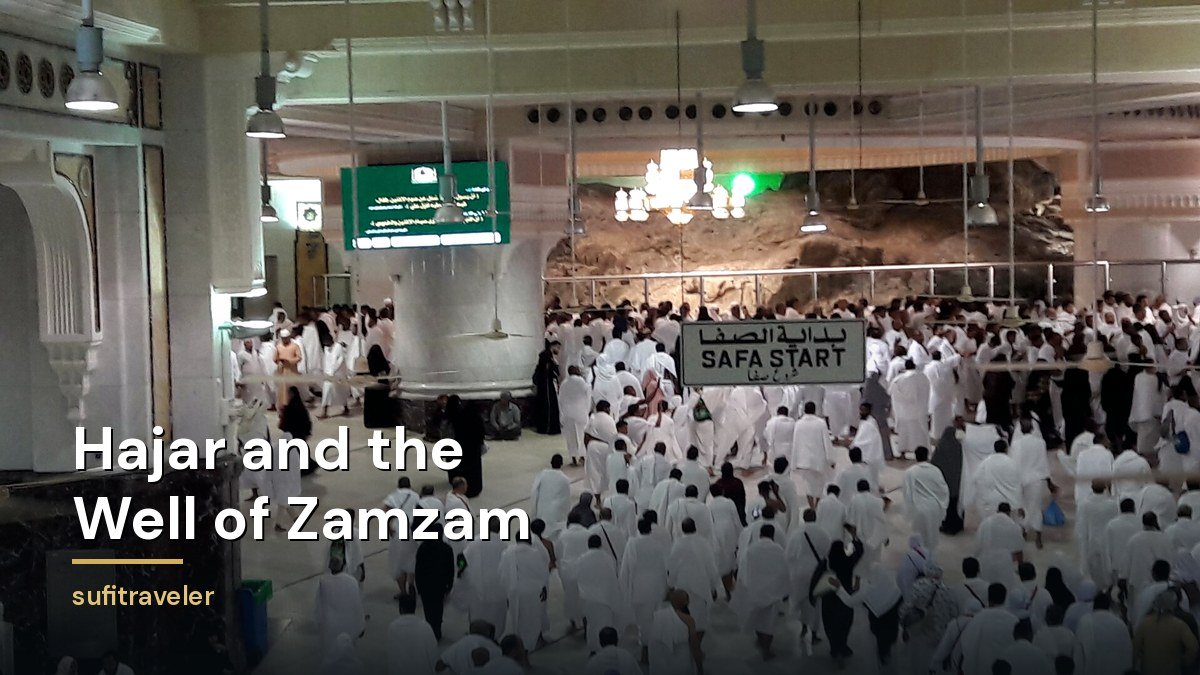
She came down, and in the valley bottom “she tucked up her robe and ran in the valley like a person in distress and trouble” until she reached Marwah. She looked again and saw no one. She did this seven times.
Then the Prophet ﷺ said:
“This is the source of the tradition of the walking of people between them (i.e. Safa and Marwa).”
The Qur’an confirms the place of these hills in worship: “Indeed, aṣ-Ṣafā and al-Marwah are among the symbols of Allāh” (Qur’an 2:158).
The spring
On her last arrival at Marwah, Hajar heard a voice. She hushed herself to listen, heard it again, and called out, “You have made me hear your voice; have you got something to help me?” She then saw an angel at the place of Zamzam, “digging the earth with his heel (or his wing), till water flowed from that place.”
She began building a little basin around it with her hands and filling her water-skin. The Prophet ﷺ said:
“May Allah bestow Mercy on Ishmael’s mother! Had she let the Zamzam (flow without trying to control it)… Zamzam would have been a stream flowing on the surface of the earth.”
She drank and nursed her child. The angel reassured her: “Don’t be afraid of being neglected, for this is the House of Allah which will be built by this boy and his father, and Allah never neglects His people.”
Notice the echo. Hajar had said, “He will not neglect us,” and the angel answered, “Allah never neglects His people.”
A town begins
Later, a group from the tribe of Jurhum passing nearby saw a bird circling, which told them there was water. They asked Hajar, “Do you allow us to stay with you?” She replied, “Yes, but you will have no right to possess the water,” and they agreed.
The hadith says she “was pleased with the whole situation as she used to love to enjoy the company of the people.” Families settled, and Ismail grew up among them and learnt Arabic from them. Years later, Ibrahim and Ismail raised the foundations of the Kaaba together, as we tell in Prophet Ibrahim: Life, Trials and Legacy.
What Zamzam is, in the sunnah
In a separate authentic narration, the Prophet ﷺ described Zamzam: “It is blessed (water) and it also serves as food” (Sahih Muslim 2473). Pilgrims drink it with gratitude and du’a. Note that this hadith speaks of blessing and nourishment; it isn’t a medical claim, and it doesn’t replace medical advice or treatment.
For the practical side, including where to drink it in the two Harams and the current rules for carrying it home, see Zamzam water: drinking it and taking it home. Airline and airport rules change, so check with your airline before travel.
Lessons from Hajar
Trust, then effort
Hajar’s trust came first: “Then He will not neglect us.” But she didn’t sit and wait. She climbed, looked, ran and searched, seven times. In the Islamic tradition, tawakkul (trust in Allah) and effort go together. Her story is often cited as one of the clearest examples.
Distress is not a lack of faith
The hadith describes her running “like a person in distress and trouble.” As a psychologist, I find it meaningful that this moment is preserved honestly. A woman of great faith felt real fear for her child, and her anxious running became an act of worship for millions. Feeling afraid doesn’t mean your faith is weak. What you do with the fear matters.
Small acts outlast us
She probably never imagined that her search would be repeated by pilgrims for centuries. Sincere effort, even unseen, can be honoured by Allah far beyond what we expect.
Walking in her footsteps
When you perform sa’i, you’re retracing Hajar’s steps. Many pilgrims find it helpful to remember her story on each lap: her question, her trust, her search, and the water that came. For what to expect on the day, see Sa’i between Safa and Marwah: what to expect. Rulings on sa’i details differ between schools, so consult a scholar.
FAQ
Who was Hajar? The mother of Prophet Ismail and the wife of Prophet Ibrahim, peace be upon them. Her story in Makkah is narrated in Sahih al-Bukhari 3364.
Why do pilgrims walk between Safa and Marwah seven times? The Prophet ﷺ said Hajar’s seven runs between the hills are “the source of the tradition of the walking of people between them” (Sahih al-Bukhari 3364), and the Qur’an calls the hills “symbols of Allāh” (2:158).
How did Zamzam begin? According to Sahih al-Bukhari 3364, an angel dug the earth with his heel (or his wing) at the place of Zamzam until water flowed for Hajar and Ismail.
Related reading
- Stories: all Qur’an and classical stories
- Why did Ibrahim break the idols?
- What is dhikr? The meaning of remembrance
- Stories of the Prophets in the Qur’an: Complete Series
For study and reflection. For rulings, consult a qualified scholar. For travel rules, check official sites before travel.
Sources
- Hadith: Sahih al-Bukhari 3364 (Ibn ‘Abbas: sunnah.com
- Hadith: Sahih Muslim 2473 (Zamzam: sunnah.com
- Qur’an 14:37 and 2:158 (Sahih International via quran.com; checked via api.quran.com 15 Nov 2026)
Featured image: “Mas’aa1” by Tahir mq, via Wikimedia Commons, CC BY-SA 4.0; cropped, with title added.