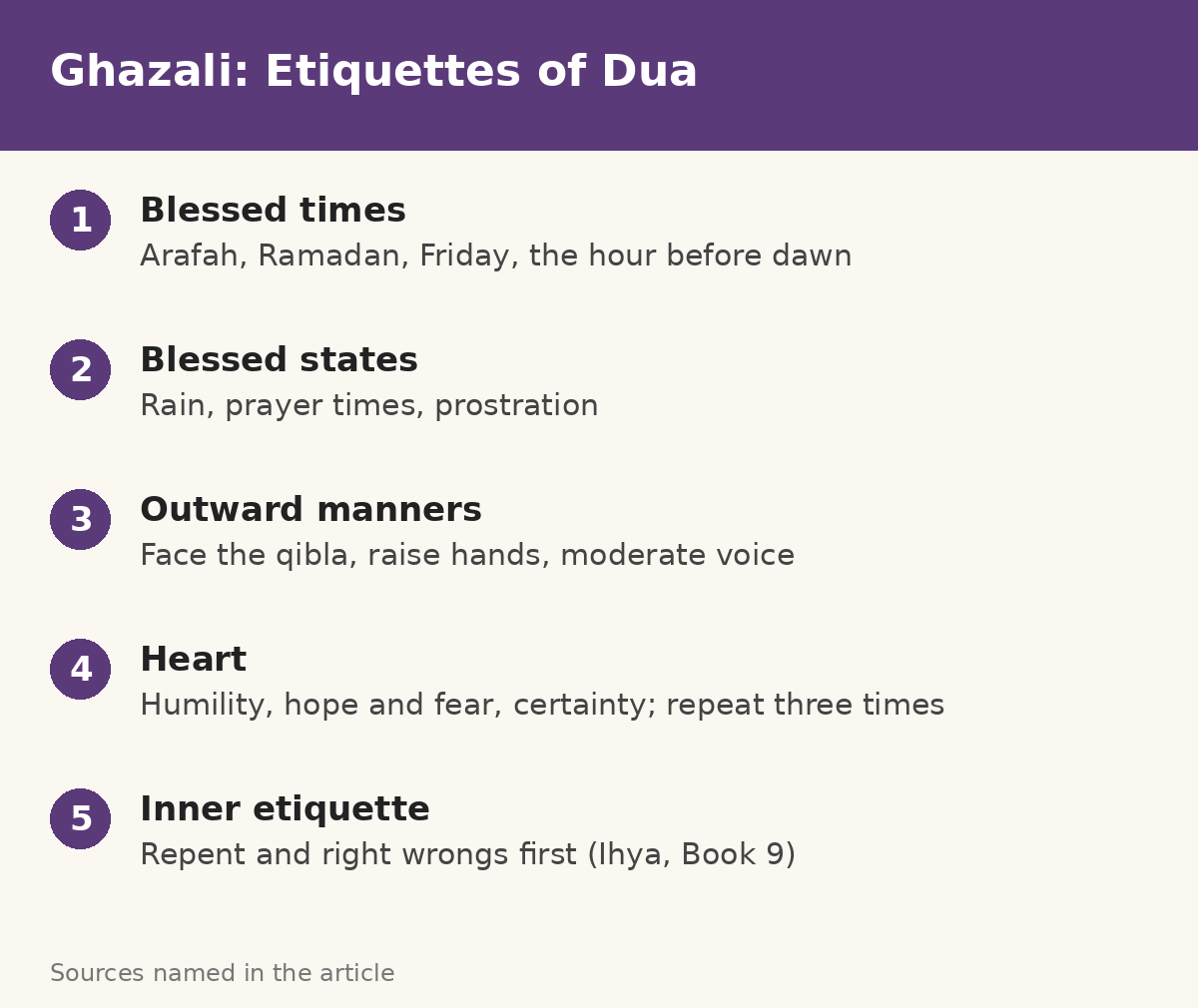
آداب دعا کے بارے میں امام غزالیؒ (وفات 505ھ) نے احیاء علوم الدین کی نویں کتاب، “کتاب الاذکار والدعوات” میں دس آداب بیان کیے ہیں۔ The etiquettes of dua set out by Imam al-Ghazali in Book Nine of Ihya Ulum al-Din are ten simple manners that turn asking into worship. Below is a summary in Urdu, then English, in our own words.
اردو: امام غزالیؒ کے دس آدابِ دعا
۱۔ مبارک اوقات تلاش کریں: یومِ عرفہ، رمضان، جمعہ، اور رات کا آخری حصہ (سحری کا وقت)۔
۲۔ مبارک حالتوں سے فائدہ اٹھائیں: جیسے بارش کے وقت، فرض نماز کے وقت، اور سجدے کی حالت۔
۳۔ قبلہ رخ ہو کر ہاتھ اٹھائیں۔
۴۔ آواز درمیانی رکھیں: نہ بہت بلند، نہ بالکل دبی ہوئی۔
۵۔ تکلف والی قافیہ بندی سے بچیں: دعا عاجزی ہے، دکھاوا نہیں۔
۶۔ عاجزی، رغبت اور خوف کے ساتھ دعا کریں۔
۷۔ قبولیت کا یقین رکھیں: “اگر تو چاہے” کہہ کر دعا کو کمزور نہ کریں۔
۸۔ اصرار کریں اور تین بار دہرائیں: اور قبولیت میں دیر سمجھ کر جلدی نہ کریں۔
۹۔ اللہ کے ذکر سے دعا شروع کریں: سیدھا مانگنے سے پہلے حمد و ثنا کریں۔
۱۰۔ باطنی ادب: سچی توبہ کریں، لوگوں کے حقوق ادا کریں، اور پورے دل سے اللہ کی طرف متوجہ ہوں۔ امام غزالیؒ کے نزدیک قبولیت کا اصل اور قریبی سبب یہی ہے۔
English: the ten etiquettes in brief
- Seek blessed times. Ghazali names the Day of Arafah, Ramadan, Friday, and the last part of the night before dawn, citing “And in the hours before dawn they would ask forgiveness” (Adh-Dhariyat 51:18).
- Use honoured moments and states, such as rainfall, the time of the obligatory prayers, and prostration.
- Face the qibla and raise your hands. He cites the Prophet ﷺ at Arafah facing the qibla and supplicating until sunset.
- Keep your voice in between, neither loud nor too low.
- Avoid forced rhyme. The one who supplicates stands in humility, and showing off does not fit that state.
- Be humble, hopeful, and fearful, citing Al-Anbiya 21:90: they called on Us in hope and fear and were humble before Us.
- Ask with certainty. He quotes the hadith forbidding “forgive me if You will”: ask firmly, for no one can compel Allah.
- Persist and repeat three times, following Ibn Mas’ud’s report, and do not think the answer is slow.
- Begin with the remembrance of Allah before asking.
- The inner etiquette: sincere repentance, putting right wrongs done to others, and turning to Allah with full attention. Ghazali calls this the nearest cause of an answer. He tells of Musa (peace be upon him) praying for rain with no answer while a talebearer was among the people.
How to use this today
Choose one blessed time this week, such as the last third of the night or Friday afternoon. Before you ask, repent, settle any wrong you owe someone, praise Allah, and send blessings on the Prophet ﷺ. Then ask three times with certainty. For more on remembrance, see What Is Dhikr?, the adab of dhikr, and our introduction to the Ihya.
Source
Abu Hamid al-Ghazali (d. 505 AH / 1111 CE), Ihya Ulum al-Din, Book Nine (Book of Invocations and Supplications), chapter on the proprieties of supplication. Checked in an English translation of Volume 1, scanned on archive.org. The Urdu and English above are our own summaries, not a translation.
FAQ
Which book of the Ihya covers dua?
Book Nine, on invocations and supplications (Kitab al-Adhkar wa al-Da’awat).
Does Ghazali say to repeat a dua?
Yes. He advises persistence and repeating three times.
What is the most important etiquette?
Ghazali calls the inner one (repentance, righting wrongs, and full attention to Allah) the nearest cause of an answer.
Leave a Reply