Repentance in Sufism is where the path begins, not a step you leave behind. In his Risala, the classic manual of the eleventh century, Abu al-Qasim al-Qushayri opens his chapters on the spiritual stations with tawba. What follows is a summary in our own words of how he presents it. If the book is new to you, start with our introduction to Qushayri’s Risala.
Why tawba comes first
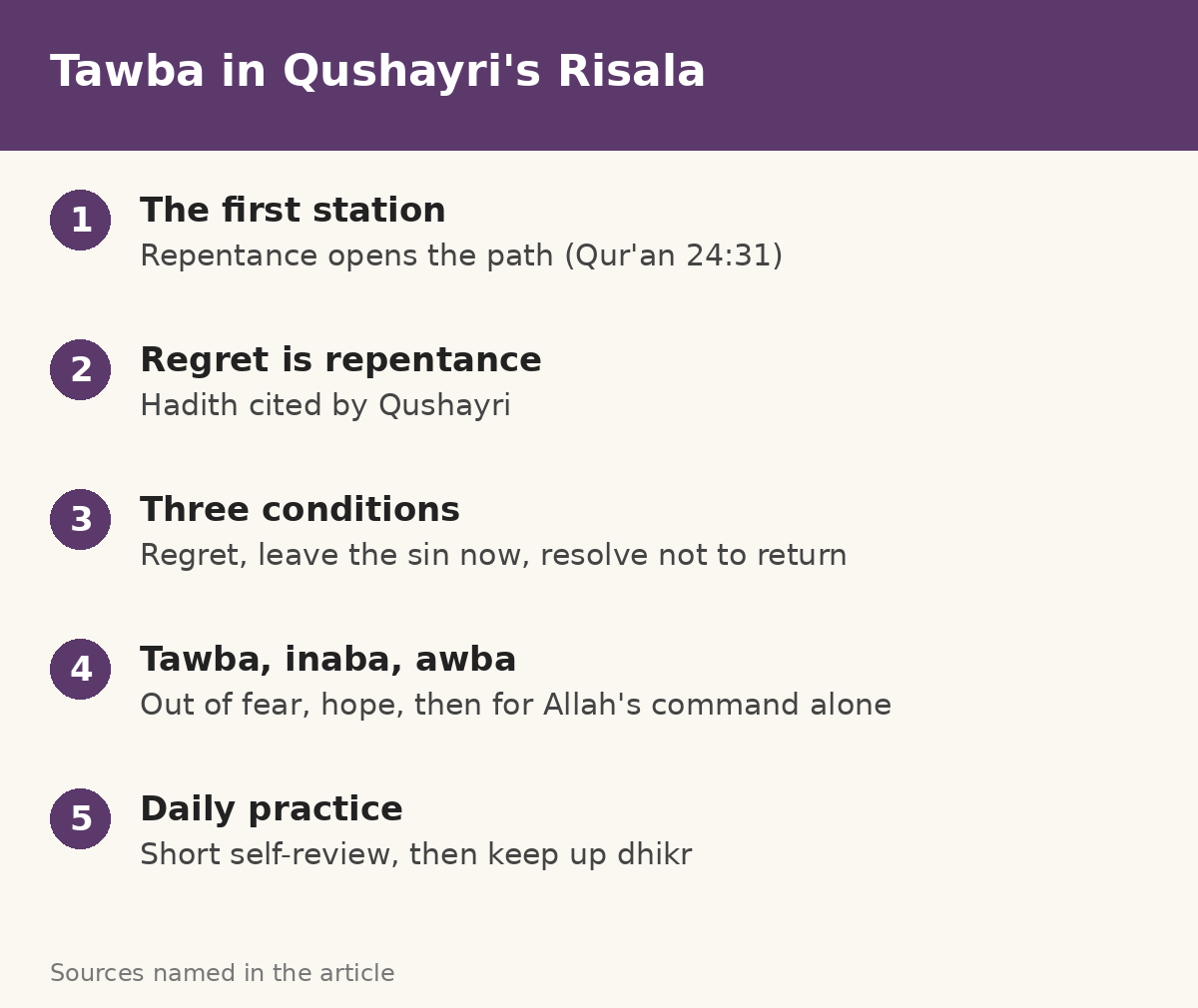
Qushayri treats repentance as the first station for anyone setting out on the path. He grounds it in the Qur’an’s call to all believers: وَتُوبُوا إِلَى اللَّهِ جَمِيعًا أَيُّهَ الْمُؤْمِنُونَ لَعَلَّكُمْ تُفْلِحُونَ (“Turn to Allah all together, O believers, so that you may succeed,” Surah al-Nur 24:31).
The meaning of the word
Tawba literally means “returning.” In the Risala it means turning back from what the Sacred Law blames toward what it praises. Qushayri cites the hadith “regret is repentance” (النَّدَمُ تَوْبَةٌ) to show that regret is at its heart.
Three conditions
Following the scholars before him, Qushayri lists three conditions for sound repentance:
- regret for what you did,
- leaving the sin at once,
- a firm resolve not to go back to it.
Turning back for higher reasons
The Risala also notes three related words for turning back: tawba, inaba and awba. As Qushayri presents them, the first is turning back out of fear of punishment, the second out of hope for reward, and the third simply because Allah commands it. For the reader, this is a ladder. Begin wherever you honestly are.
Putting it into practice
Qushayri’s teaching suggests a short daily review. Notice the fault, feel real regret, stop it today, and resolve not to return. Then keep up remembrance, as described in our post on the adab of dhikr. This post gives no new wazifa, because we only share practices whose classical source we can name.
FAQ
Where does Qushayri discuss repentance?
In the chapter on tawba in his Risala, where it is the first of the stations.
What are the conditions of repentance?
Regret, leaving the sin at once, and resolving not to return.
What is the difference between tawba, inaba and awba?
In the Risala, they describe turning back out of fear, out of hope for reward, and for Allah’s command alone.
Leave a Reply